


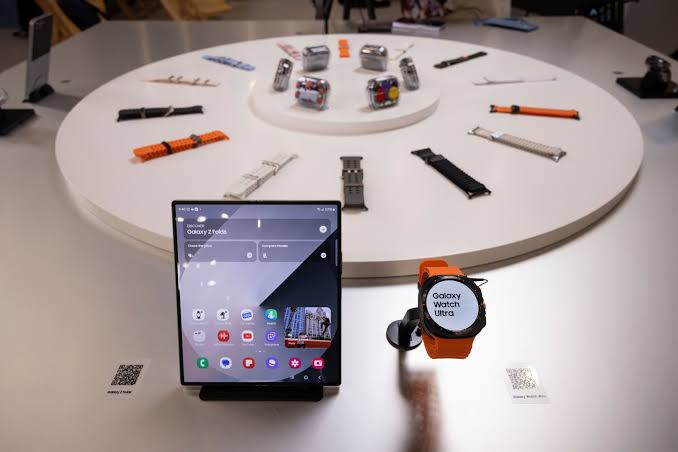
Samsung appears to be preparing a major wearable refresh, with the Galaxy Wearable app reportedly revealing the names of its next earbuds and smartwatches ahead of launch.
The Galaxy Watch 9 is expected to continue Samsung’s rounded smartwatch design language. Image credit: Android Headlines / OnLeaks via SamMobile.
Samsung’s next generation of wearables is beginning to take shape, with new names reportedly appearing inside the Galaxy Wearable app ahead of launch. According to SamMobile, the company has referenced three upcoming devices within the app: Galaxy Able, Galaxy Watch 9 and Galaxy Watch Ultra 2.
The discovery gives Samsung fans an early look at how the company may be positioning its next wave of wearable products. While the Galaxy Watch 9 and Galaxy Watch Ultra 2 suggest familiar smartwatch upgrades, the Galaxy Able name is more intriguing. Rather than another traditional pair of Galaxy Buds, the device is expected to be Samsung’s first clip-on style wireless earbud, potentially using bone conduction technology instead of conventional speaker drivers.
For Samsung, the move could mark a meaningful expansion of the Galaxy ecosystem. Wearables are no longer just accessories. They are becoming health tools, fitness companions, AI-powered assistants and lifestyle devices that sit alongside smartphones, tablets, laptops and smart rings.
Highlight: The Galaxy Able name suggests Samsung may be preparing to move beyond conventional earbuds and into the open-ear audio market.
Galaxy Able Could Be Samsung’s Most Unusual Earbuds Yet
The most eye-catching part of the leak is Galaxy Able. Previous rumours suggested Samsung was working on a product called Galaxy Buds Able, but the latest app discovery points to a shorter final name: Galaxy Able.
That naming choice matters. By dropping “Buds”, Samsung may be trying to separate the product from its traditional in-ear audio line. Galaxy Able is expected to use a clip-on design, allowing the device to sit around the ear rather than sealing inside the ear canal. This would place it closer to the growing open-ear audio category, which has become increasingly popular among runners, cyclists, gym users and people who want to remain aware of their surroundings.
Samsung’s current Galaxy Buds range uses a more conventional earbud format, while Galaxy Able could introduce a very different open-ear approach. Image credit: Samsung Mobile Press.
If Samsung does use bone conduction technology, Galaxy Able would work differently from regular earbuds. Traditional earbuds move air through speaker drivers to produce sound. Bone conduction devices use vibration to send audio through the bones near the ear, leaving the ear canal more open.
That could make Galaxy Able especially useful for outdoor activity, commuting or training environments where awareness matters. However, open-ear audio also brings challenges. Sound quality, bass response and privacy can vary significantly depending on the design, fit and technology used.
What to watch: Galaxy Able could give Samsung a new audio category, but the real test will be whether it can deliver comfort and awareness without sacrificing too much sound quality.
Galaxy Watch 9 Looks Like a More Familiar Upgrade
Alongside Galaxy Able, Samsung’s app reportedly references the Galaxy Watch 9. Based on recent reporting, the new smartwatch is expected to keep a design similar to its predecessor, suggesting Samsung may focus more on internal refinements than a dramatic visual overhaul.
That would not be surprising. Samsung’s Galaxy Watch line has already established a strong identity, with rounded displays, health tracking, Wear OS integration and Galaxy AI features becoming central to the experience. A familiar design could allow Samsung to concentrate on performance, battery life, fitness tracking and software improvements.
The Galaxy Wearable app reportedly references both Galaxy Watch 9 and Galaxy Watch Ultra 2. Image credit: @Alfaturk16 / X via SamMobile.
The Galaxy Watch 9 is rumoured to continue using Samsung’s Exynos W1000 chip. If accurate, that would suggest the standard model may be more evolutionary than revolutionary. However, smartwatch improvements are not always about raw processing power. Better sensors, smoother software, more accurate health insights and deeper AI features can still make a meaningful difference.
For everyday users, the Watch 9 will likely need to deliver a balance of comfort, battery performance, health tracking and smartphone integration. Samsung already has a strong foundation, but competition from Apple, Google, Garmin and Huawei means each new generation has to justify itself clearly.
Galaxy Watch Ultra 2 Could Push Further Into Premium Fitness
The Galaxy Watch Ultra 2 is expected to sit at the top of Samsung’s wearable range. The original Galaxy Watch Ultra gave Samsung a more rugged, premium smartwatch aimed at fitness enthusiasts, outdoor users and those wanting a more durable device. The Ultra 2 appears likely to build on that positioning.

Samsung positioned the original Galaxy Watch Ultra as its most powerful smartwatch, with a more rugged build, titanium case elements and advanced health technology. Image credit: Samsung Newsroom.
Reports suggest the Galaxy Watch Ultra 2 could feature a similar design to the original model, but with upgraded internals. The most significant rumoured change is the use of Qualcomm’s Snapdragon Wear Elite chip, which could improve performance and efficiency. The device is also expected to feature an upgraded OLED display with peak brightness of up to 5,000 nits.
That brightness figure would be particularly important for outdoor users. A smartwatch aimed at runners, cyclists, hikers and endurance athletes needs to remain readable in harsh sunlight. A brighter display, stronger battery life and improved fitness tracking would all help Samsung strengthen its position in the premium smartwatch category.
Industry angle: Samsung’s Ultra watch strategy is not only about competing with Apple Watch Ultra. It is also about giving Galaxy users a more serious outdoor and performance-focused wearable.
Video Embed: Samsung Galaxy Watch Ultra
<iframe width=”100%” height=”420″ src=”https://www.youtube.com/embed/77LnWEdwiVg” title=”Samsung Galaxy Watch Ultra” frameborder=”0″ allowfullscreen></iframe>
The original Galaxy Watch Ultra showed Samsung’s ambition to move deeper into premium fitness, outdoor tracking and rugged smartwatch design.
Why These Names Matter
Product names may seem like small details, but they tell us how Samsung wants customers to understand its next devices. Galaxy Watch 9 is simple and direct, keeping the standard smartwatch range on a familiar path. Galaxy Watch Ultra 2 confirms that Samsung appears committed to building the Ultra line into a recurring premium category.
Galaxy Able is the boldest name of the three. It suggests a product that may be marketed less as a traditional earbud and more as an accessibility-friendly, movement-friendly or awareness-focused audio wearable. The name also gives Samsung room to develop a broader product identity if the first version performs well.
Samsung has already expanded its wearable strategy beyond watches and earbuds with the Galaxy Ring. Adding a clip-on open-ear device would give the company another way to compete in health, fitness and lifestyle technology.
Samsung’s wearable strategy is increasingly centred on health, fitness, AI and connected lifestyle experiences. Image credit: Samsung Newsroom.
A Bigger Wearables Push Around Galaxy AI
Samsung’s broader direction is clear. Galaxy wearables are becoming more intelligent, more personalised and more connected to Samsung Health and Galaxy AI. Watches are being used to collect health and activity data. Earbuds are being used for translation, calls, audio personalisation and environmental awareness. The Galaxy Ring has pushed Samsung further into passive wellness tracking.
The next phase could be about making those devices work more closely together. A Galaxy phone, Galaxy Watch, Galaxy Ring and Galaxy Able could each play a different role in the same ecosystem, collecting signals, delivering alerts and supporting more personalised AI experiences.
That is where Samsung has a major opportunity. The company does not need each product to stand alone. It can use its ecosystem to make each device more valuable when paired with the others.
Market angle: Samsung’s biggest advantage is not simply launching more wearables. It is building a connected system where audio, health, fitness and AI all work together.
The Bottom Line
Samsung’s reported Galaxy Wearable app references suggest the company is preparing a busy wearable launch cycle. Galaxy Watch 9 looks set to continue Samsung’s mainstream smartwatch line, while Galaxy Watch Ultra 2 could strengthen its push into premium fitness and outdoor performance.
Galaxy Able, however, may be the most interesting product of the group. If Samsung is truly preparing a clip-on, open-ear device with bone conduction technology, it could mark the company’s first major step into a category that sits between earbuds, sports audio and wearable tech.
Nothing is official until Samsung confirms the products, but the names alone suggest a company thinking beyond routine updates. The next Galaxy wearables may not just be faster or brighter. They may show how Samsung plans to build a more complete AI-powered ecosystem around the body, from the ears to the wrist and beyond.
Reference note for accuracy: The reported Galaxy Able, Galaxy Watch 9 and Galaxy Watch Ultra 2 names come from SamMobile’s coverage of entries found in the Galaxy Wearable app. SamMobile reports that Galaxy Able is expected to be Samsung’s first clip-on style wireless earbud and may use bone conduction technology, while Galaxy Watch 9 and Galaxy Watch Ultra 2 are expected to retain designs similar to their predecessors, with the Ultra model rumoured to feature Snapdragon Wear Elite and a brighter OLED display. Samsung’s official newsroom and mobile press materials were used for wider context on the Galaxy Watch Ultra, Galaxy Buds3 Pro and Samsung’s wearable strategy.