


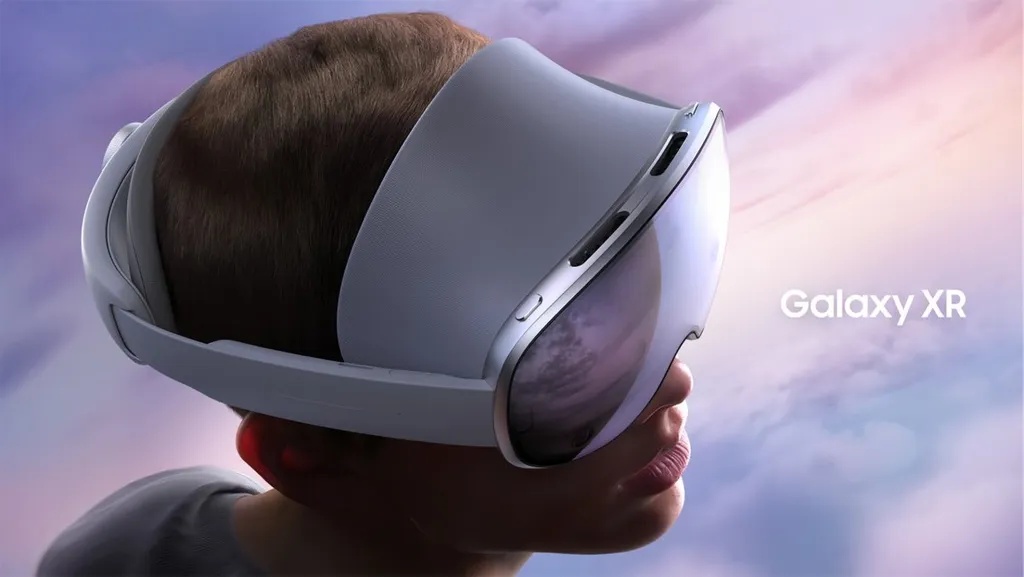
Samsung has officially unveiled the Galaxy XR, its first extended reality headset built in collaboration with Google and powered by Qualcomm. Priced at $1,799.99, the headset marks a bold step forward for immersive technology, combining cutting-edge hardware with an open Android-based ecosystem that aims to make extended reality more accessible than ever.
Next-Generation Design and Hardware
The Galaxy XR represents Samsung’s entry into the next frontier of connected devices. It runs on the powerful Snapdragon XR2 + Gen 2 chipset, designed specifically for high-performance virtual and mixed-reality experiences. Dual micro-OLED displays deliver stunning clarity, offering up to 3,552 × 3,840 resolution per eye with refresh rates reaching 90 Hz for fluid, lifelike visuals.
To address comfort and practicality, Samsung has opted for a lightweight design at around 545 g and a detachable battery pack. This approach redistributes weight, improving wearability while allowing users to swap batteries for longer sessions. Battery life averages 2.5 hours of video playback, or roughly 2 hours of general mixed-reality use — competitive for its category.
Built on Android XR and Gemini AI
At its core, the Galaxy XR operates on Android XR, Google’s newly developed platform for spatial computing. Integrated directly into the software is Gemini AI, providing intelligent voice, gesture and eye-tracking controls. This allows users to interact with digital content more naturally — whether navigating interfaces, manipulating 3D models or switching seamlessly between real-world passthrough and fully immersive modes.
Developers will also find opportunity here: the open framework supports Android apps, OpenXR, WebXR and Unity, enabling new and existing applications to run in mixed-reality environments.
A Strategic Collaboration
The partnership between Samsung, Google and Qualcomm represents a significant realignment in the XR space. For Google, it signals a strong return to immersive technology after years of limited presence. For Samsung, it’s a declaration that its next wave of innovation will extend far beyond smartphones. Together, they’re shaping an ecosystem that favours openness and scalability over exclusivity.
Industry analysts view the Galaxy XR as a direct competitor to premium headsets on the market but with a broader appeal. Rather than catering solely to gamers or industrial users, the device targets a mixed audience — professionals, creatives and everyday consumers looking for an advanced yet versatile digital interface.
Challenges Ahead
Despite its promise, the Galaxy XR faces the same challenges as its competitors. Battery life and comfort remain ongoing concerns for prolonged use, while the market still awaits large-scale adoption of truly immersive applications. Price will also be a factor; at $1,799, the headset remains a premium purchase.
Still, with hardware, software and AI integration now converging, Samsung and Google’s timing couldn’t be better.
The Future of XR
The Galaxy XR is more than another gadget — it’s the first sign of a larger shift in personal technology. As extended reality moves from niche to mainstream, this device positions itself as a gateway to the future of computing — one where AI, spatial design and seamless interaction redefine how we connect, create and experience the digital world.