


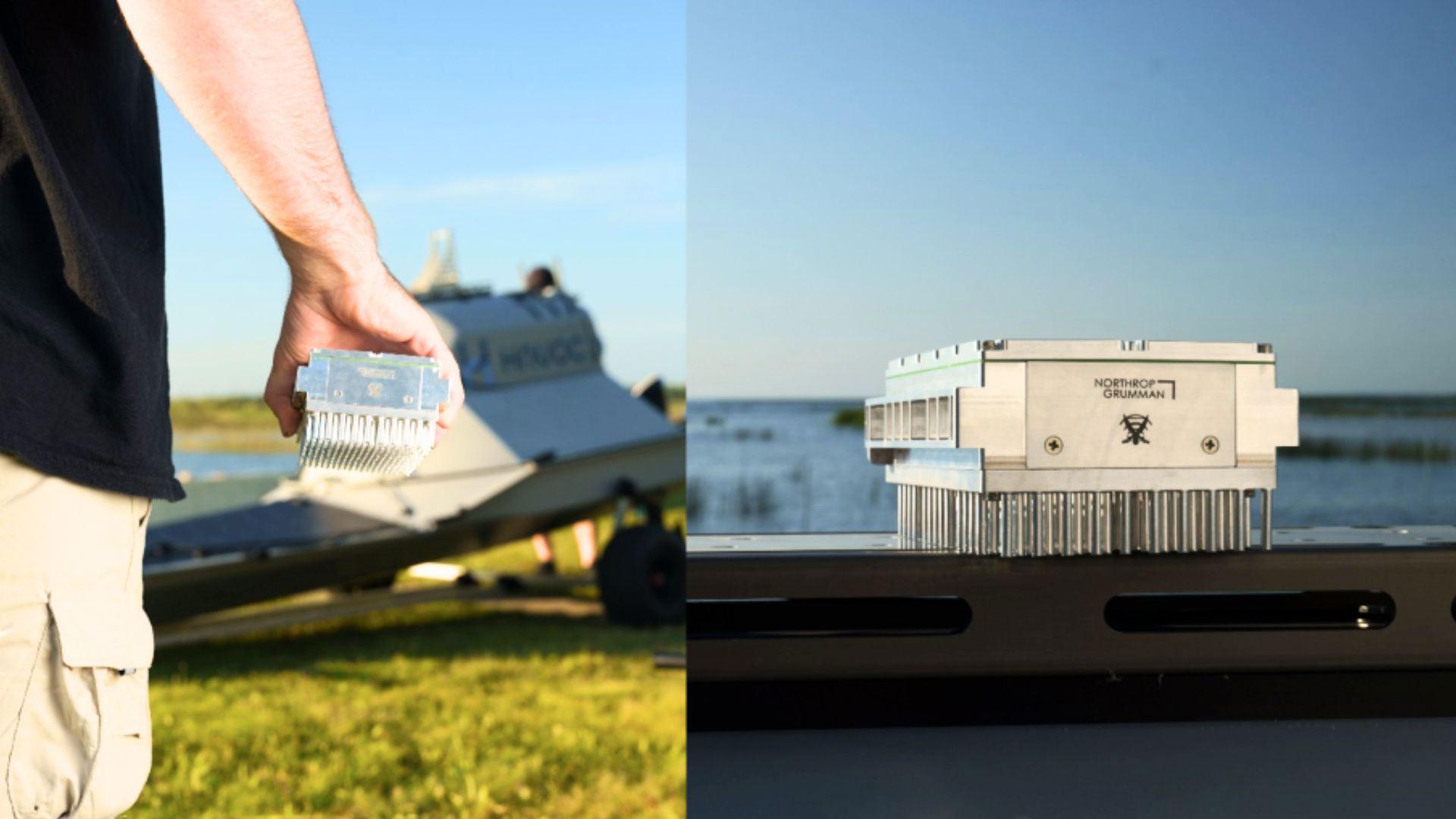
Electronic warfare has moved from a specialist niche into a central pillar of modern military capability. Recent demonstrations and industry showings made one thing clear: the future of conflict will be decided as much in the electromagnetic spectrum as on land, sea and in the air. This new generation of systems stretches from compact, vehicle-mountable jammers to enterprise-scale sensing networks, and together they promise to reshape how commanders sense, decide and act.
The new toolbox
Modern EW is no longer about a single box that blocks a signal. Today’s offerings combine several capabilities into integrated suites:
• Sensing and reconnaissance: High-resolution signals intelligence systems now detect and classify emissions across very wide frequency bands. That allows forces to map not only where adversary radios and radars operate, but how they are being used, enabling faster, more accurate targeting and spectrum management.
• Precision jamming and deception: Far from brute-force blanket interference, precision jammers target specific waveforms, links or geographic sectors to deny enemy capabilities while minimising collateral disruption to friendly systems. Deception techniques, including spoofing of navigation and communications signals, are used to mislead sensors rather than destroy them.
• Directed energy and non-kinetic effectors: Emerging demonstrations show how high-power microwave systems and other directed-energy tools can degrade electronics at range, providing a non-kinetic option to neutralise drones, sensors or exposed command nodes.
• Counter-drone suites: With small unmanned aircraft proliferating, modular EW payloads — from handheld devices to vehicle-mounted systems — are being paired with radar and optical sensors to detect, track and defeat hostile drones via RF denial, protocol hijack or GPS spoofing.
• Networked, multi-domain integration: The most eye-catching demos link airborne, maritime and ground sensors to create a common operating picture. Disaggregated sensors feed a central analysis node which in turn issues tailored jamming or hardening instructions — enabling coordinated spectrum control across a theatre.
Commercialisation and dual-use
A striking change is how quickly technologies once confined to major defence programmes are becoming available to smaller forces and even commercial operators. Modular form factors, reduced size-weight-power profiles, and software-defined radio architectures mean that advanced EW tools are now accessible to coalition partners and allied militaries that previously relied on a small set of suppliers.
This commercialisation brings both opportunity and complexity. On the plus side, faster innovation cycles and competitive pricing accelerate capability delivery. On the minus side, proliferation and export control become immediate policy challenges, with governments having to balance industrial competitiveness against the risk of sensitive tech reaching malign actors.
Operational themes emerging from recent demos
- Discrimination over disruption. Operators prefer narrowly tailored effects that deny specific adversary capabilities while preserving civilian infrastructure and friendly communications. Precision, not power, wins in congested, contested environments.
- Automation and AI. Machine learning is being used to sift RF clutter, identify novel waveforms and automate jamming responses in milliseconds — critical when human reaction times are too slow.
- Resilience and redundancy. As EW becomes a first-order threat, militaries are investing heavily in hardened communications, diverse navigation strategies (inertial and multi-constellation GPS), and fallback options to preserve command and control.
- Tactical affordability. Low-cost EW kits for patrols and convoys show up alongside high-end, strategic systems — a sign that spectrum control is being treated as a ubiquitous force multiplier rather than an elite capability.
Ethical, legal and safety considerations
The rise of non-kinetic means and spectrum warfare raises new questions. Spoofing and deception can have unintended safety consequences (for civil aviation or emergency services), and directed energy systems must be regulated to avoid collateral human or environmental harm. Legal frameworks, rules of engagement and export controls are struggling to keep pace with the technology.
What this means for defence planners
Electronic-spectrum dominance is now essential to success in high-intensity operations. Planners should prioritise:
- Investing in distributed sensing and resilient comms so forces can operate even when parts of the spectrum are contested.
- Developing doctrine that blends kinetic and non-kinetic effects, and training crews to operate under degraded-spectrum conditions.
- Tightening procurement and export controls while fostering an industrial base that can innovate rapidly and ethically.
Final thought
The latest EW demonstrations underline a new reality: electromagnetic control is a strategic enabler. Forces that can sense, decide and act faster in the spectrum will hold decisive advantages. But that advantage depends as much on doctrine, legal guardrails and training as it does on new hardware. As the industry marches forward, the balance between capability, responsibility and stability will define whether these powerful tools enhance security or raise new risks.
If you’d like, I can now:
- Produce a shorter news-style summary for social posts (Twitter/LinkedIn length).
- Create a technical explainer on one of the topics above (e.g., GPS spoofing, high-power microwaves, or software-defined radio jamming).
- Try again to fetch and summarise the exact Interesting Engineering piece and present a link-free summary — say the word and I’ll reattempt the live fetch.