


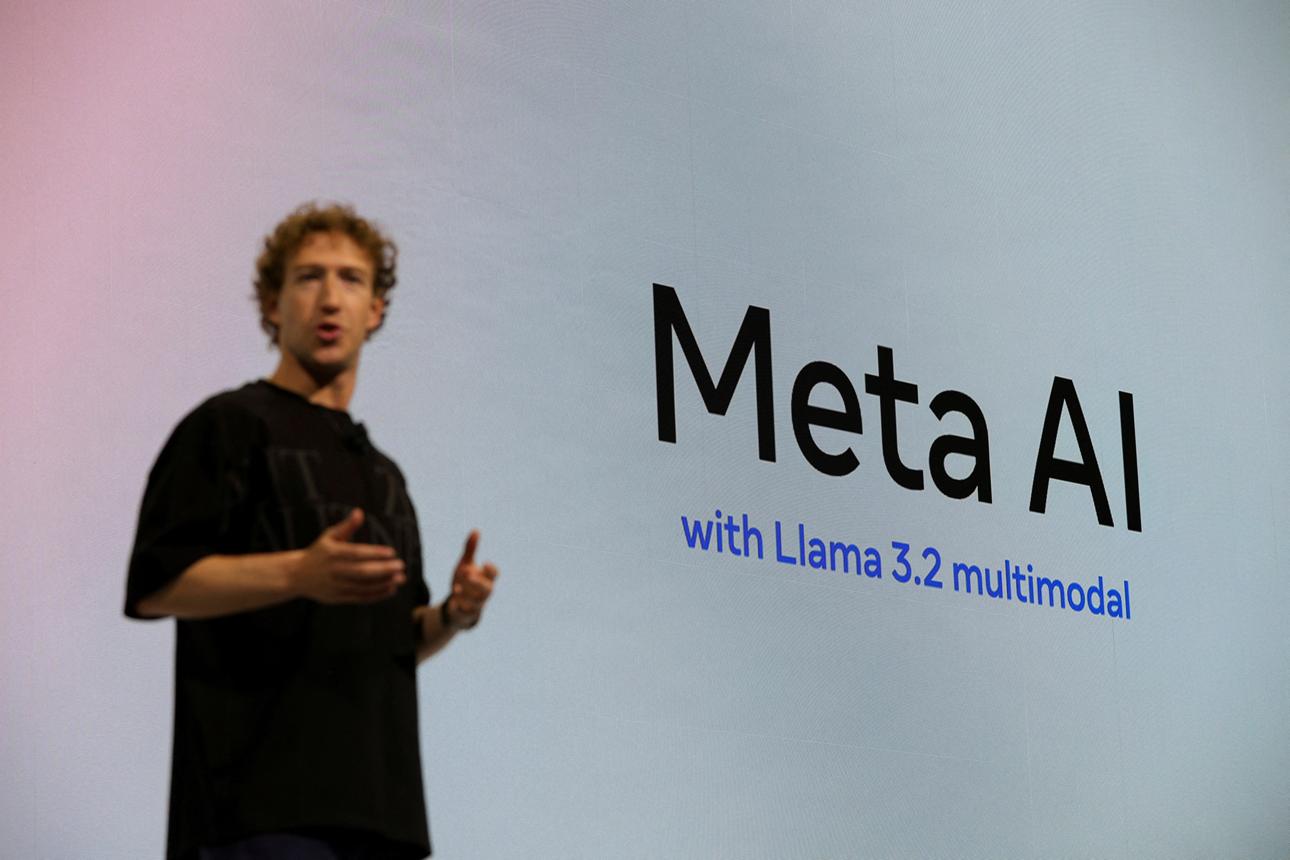
For much of the past two years, Meta positioned itself as the champion of open AI. Its Llama models were released into the wild, adopted by developers, adapted by companies, and woven into the broader ecosystem at scale. It was a strategy built on reach rather than restriction, one that prioritised influence over control. Muse Spark signals a clear shift away from that posture, not as a contradiction, but as a response to how quickly the competitive landscape has evolved.
According to reporting from WIRED, Muse Spark is not open source. It is accessed through Meta’s own infrastructure, its capabilities contained within the company’s platforms rather than distributed across the developer community. That decision, on its own, marks a turning point. Meta is no longer just seeding the ecosystem; it is beginning to consolidate advantage within it. The distinction is subtle, but strategically significant, because the more capable the system becomes, the more valuable it is to control how and where it is used.
What makes this shift particularly interesting is that it does not abandon Meta’s earlier philosophy entirely. Instead, it reframes it. Open models still serve a purpose—they attract developers, accelerate adoption, and extend the company’s influence across the industry. But at the highest level, where capability translates directly into competitive power, openness gives way to control. Muse Spark sits precisely at that intersection, representing a model that is not meant to be modified or redistributed, but experienced through the channels Meta defines.
The timing of this move is not accidental. Meta’s previous generation of models did not land with the same impact as those of its competitors, prompting a broader reset inside the company. New leadership, deeper investment, and a more focused AI division have all contributed to what is effectively a second phase of Meta’s AI strategy. Muse Spark is the first clear expression of that shift, arriving in a market where OpenAI, Google DeepMind and Anthropic are all pushing toward systems that do more than respond—they act, plan and execute.

This is where Muse Spark’s design becomes central to the story. It is not positioned as a conventional language model, but as part of a broader ambition that Mark Zuckerberg has described as “personal superintelligence.” The language matters, because it reframes the role of AI from tool to companion system—something that operates across tasks rather than within them. Multimodal capability sits at the core, allowing the model to process text, images, audio and video in a unified way, moving closer to systems that can coordinate complex, real-world activities rather than simply respond to prompts.
In that context, the question of openness becomes more than philosophical. It becomes economic. The closer AI moves toward acting on behalf of users, the more critical it becomes to control its deployment, its outputs, and its integration into wider platforms. This is the space where advantage is no longer measured by access alone, but by how tightly that access is managed.
What emerges is not a rejection of open AI, but a more calculated version of it. Meta appears to be moving toward a hybrid model, where openness is used to expand influence at the edges, while core capabilities remain tightly held. It is a balance between ecosystem growth and competitive protection, one that reflects a broader shift across the industry as AI systems become more powerful and more commercially significant.
The deeper story here is not simply that Meta has chosen to close one model. It is that the AI industry itself is entering a new phase. The early period was defined by access, where the goal was to put powerful tools into as many hands as possible. The current phase is defined by capability, where the focus is on building systems that can operate across increasingly complex domains. What comes next—and what Muse Spark points toward—is a phase defined by control, where the question is not just who can build these systems, but who governs how they are used.
Meta’s strategy reflects that reality. It is no longer enough to participate in the AI race. The objective now is to shape its direction.