


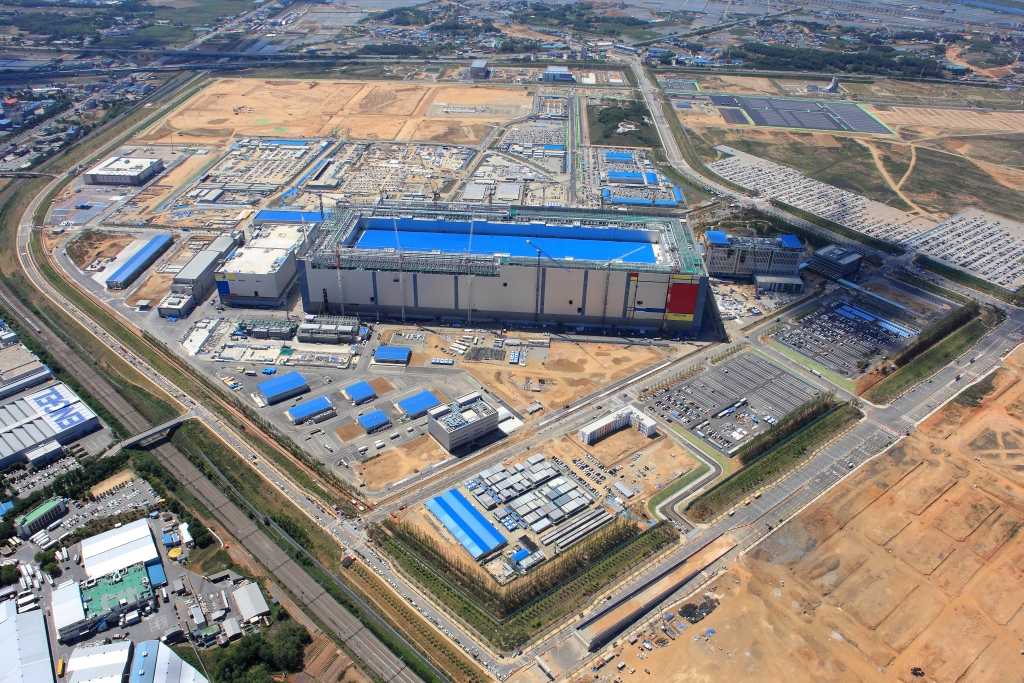
South Korea has unveiled a record spending plan for 2027 as the country looks to strengthen its position in artificial intelligence, semiconductors and next-generation digital infrastructure.
The government’s proposed budget will reach 821 trillion won, equivalent to approximately US$597 billion, representing its most ambitious fiscal programme to date.
Technology investment is expected to play a central role, with significant funding directed towards artificial intelligence infrastructure, advanced semiconductor manufacturing and emerging areas including physical AI.
The strategy reflects South Korea’s wider ambition to translate its existing strengths in electronics and manufacturing into leadership across the next generation of global technology.
AI Moves to the Centre of Economic Strategy
Artificial intelligence is becoming an increasingly important part of South Korea’s long-term economic planning.
Government investment will focus not only on software development but also on the physical infrastructure required to support large-scale AI systems.
That includes data centres, computing capacity, advanced chips and technologies capable of bringing artificial intelligence into real-world industrial environments.
South Korea has identified three major areas for future investment: semiconductor hubs, AI data centres and physical AI.
Physical AI refers to the integration of artificial intelligence with machines and systems operating in the real world, including robotics, vehicles, factories and industrial equipment.
For South Korea, this presents a significant opportunity because the country already has strong capabilities across manufacturing, automotive production, electronics, shipbuilding and semiconductor technology.
“South Korea is attempting to turn its manufacturing and semiconductor strength into a competitive advantage in the AI era.”
Building the Infrastructure Behind AI
The government is also seeking to expand domestic computing capacity as competition for AI infrastructure intensifies globally.
Modern AI development requires enormous amounts of processing power, particularly for training and operating increasingly sophisticated models.
South Korea’s plans include investment in high-performance computing infrastructure and AI data centres, alongside efforts to develop a more self-reliant technology ecosystem.
The country has previously outlined plans to establish what it describes as an “AI expressway”, connecting major data centres and improving access to advanced computing resources.
Investment is also being directed towards domestic semiconductor technologies, including neural processing units and other specialist chips designed specifically for artificial intelligence workloads.
Semiconductor Leadership Remains a Priority
Semiconductors remain one of South Korea’s most strategically important industries.
The country is home to some of the world’s largest chipmakers and has become a central part of the global supply chain for memory semiconductors.
Under the 2027 strategy, the government plans to further develop semiconductor clusters in regions including Yongin while providing additional support for new technology hubs elsewhere in the country.
That investment comes as demand for chips continues to rise rapidly, driven in large part by the expansion of artificial intelligence.
AI systems require huge quantities of high-performance memory and processing hardware, creating significant opportunities for countries capable of manufacturing those components at scale.
South Korea’s strategy is therefore increasingly combining AI development and semiconductor policy rather than treating the two sectors independently.
Turning Manufacturing Strength into AI Leadership
One of the most distinctive elements of South Korea’s approach is its focus on using existing industrial capabilities to accelerate artificial intelligence adoption.
Government plans have highlighted sectors including robotics, automotive manufacturing, shipbuilding, home appliances, semiconductors and industrial plants as areas where physical AI could deliver significant productivity gains.
South Korea previously committed 6 trillion won over five years to accelerate AI transformation across these industries.
That creates a different model of AI growth from strategies focused primarily on software and consumer applications.
Instead, South Korea is attempting to combine advanced manufacturing, semiconductor expertise and artificial intelligence into a wider industrial technology ecosystem.
Technology Investment Becomes Economic Policy
The scale of the proposed 2027 budget demonstrates how closely technology policy and economic policy are becoming connected.
Governments around the world are increasingly treating artificial intelligence, computing infrastructure and semiconductors as strategic assets capable of influencing productivity, economic growth and international competitiveness.
South Korea is now positioning those technologies at the centre of its own growth strategy.
With investment spanning chips, data centres, AI research and real-world automation, the country is seeking to create the infrastructure required to compete across the entire AI value chain.
The result could significantly strengthen South Korea’s position within the global technology economy while creating new opportunities across computing, manufacturing, robotics and semiconductor supply chains.