


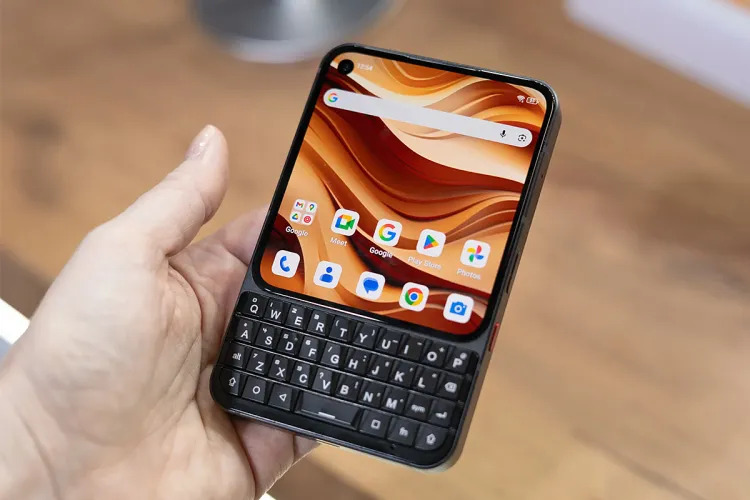
For more than a decade, the smartphone industry has moved in one direction: larger screens, fewer buttons, and an almost complete reliance on touch.
Yet beneath that surface, a different kind of demand has persisted.
The launch of the Titan 2 Elite series from Unihertz suggests that the physical keyboard, long associated with the decline of BlackBerry, is not simply a relic of the past. It may, in fact, be finding new relevance in a market that has become increasingly uniform.
Unveiled via Kickstarter, the Titan 2 Elite and its higher-spec counterpart, the Elite Pro, represent a deliberate challenge to modern smartphone conventions, combining retro design with contemporary performance in a way that speaks to a specific, but growing, audience.
A Familiar Form, Rebuilt for Modern Use
At first glance, the Titan 2 Elite feels unmistakably familiar.
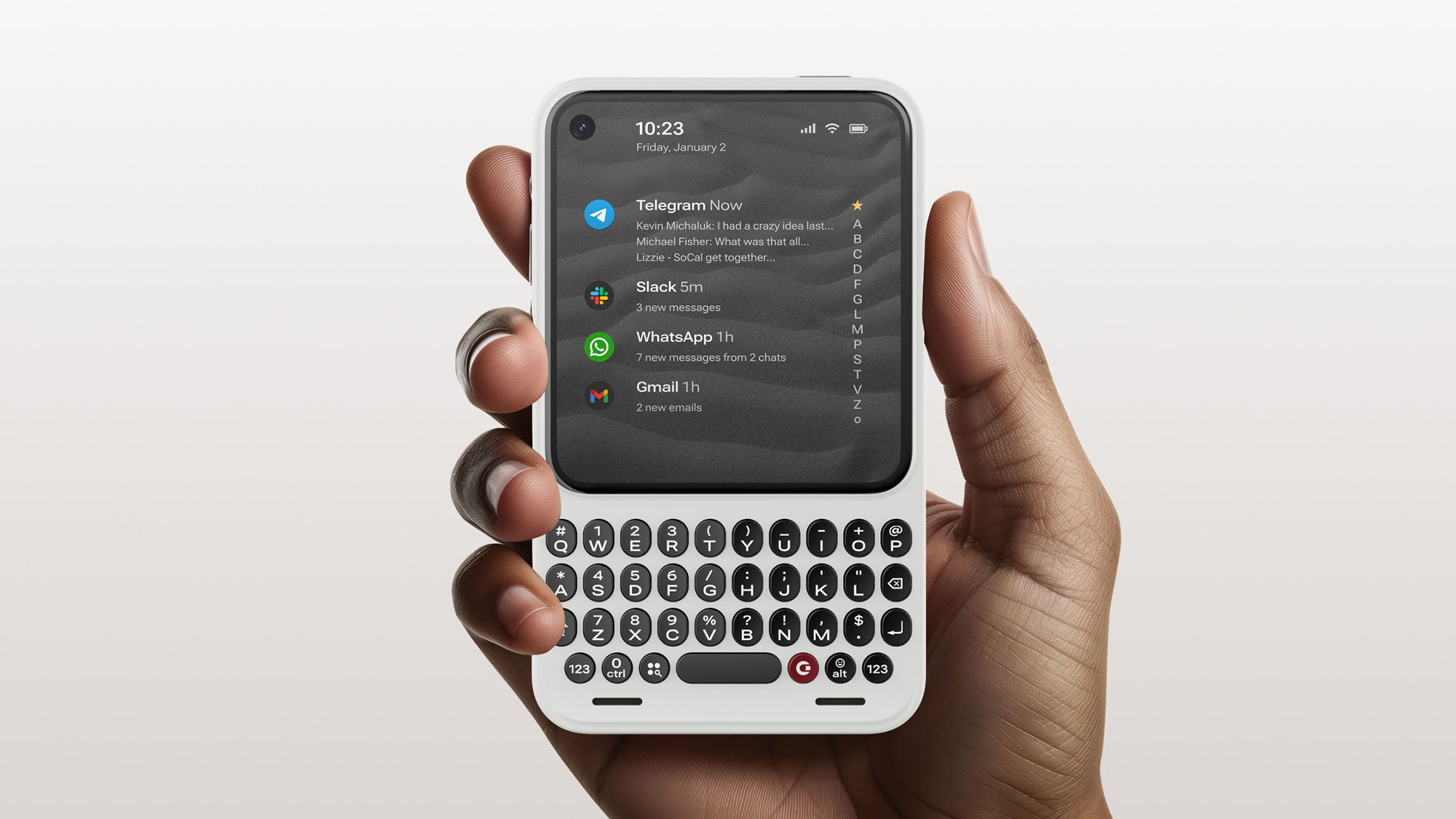
A compact, square display sits above a full QWERTY keyboard, echoing the design language of early BlackBerry devices. But beneath that nostalgia sits a thoroughly modern device.
The phone features a 4.03-inch 120Hz AMOLED display, 5G connectivity, dual SIM support, and runs Android 16 with future updates promised.
More notably, the keyboard is not simply a static input method. It functions as a touch-sensitive trackpad, allowing users to scroll, navigate, and control the interface in ways that bridge the gap between physical and digital interaction.
In an era where software increasingly dictates user experience, this hybrid approach reintroduces a layer of tactile control that has largely disappeared from mainstream devices.
Performance Meets Practicality
From a technical perspective, the Titan 2 Elite series positions itself as more than a novelty.
The standard model is powered by a Dimensity 7400 processor with 12GB of RAM and 256GB of storage, while the Elite Pro steps up to a Dimensity 8400 chip and 512GB of storage, alongside enhanced camera stabilisation.
Camera capabilities are equally competitive, with dual 50MP rear sensors and a 32MP front-facing camera, aligning the device with mid-to-high tier Android smartphones.
Battery life, anchored by a 4,050mAh unit, is designed to support a full day of usage, while features such as fingerprint and facial recognition reinforce its positioning as a fully modern device rather than a niche experiment.
Pricing reflects this balance. Early Kickstarter backers were able to secure the device at a discounted rate, with standard pricing expected to sit between $489 and $579 depending on configuration.
Demand That Never Disappeared
If the Titan 2 Elite were simply a nostalgic experiment, its market response might be limited.
Instead, the opposite appears to be true.
The Kickstarter campaign has significantly exceeded its funding target, drawing thousands of backers and millions in pledged support within days of launch.
This reflects a broader, often overlooked trend.
While the mainstream market has embraced uniformity, there remains a segment of users prioritising productivity, precision, and efficiency over entertainment-first design. For these users, typing speed, shortcut functionality, and tactile feedback are not preferences, but requirements.
In this context, the Titan 2 Elite is not attempting to compete with flagship devices. It is redefining what a “professional” smartphone can look like in 2026.
A Niche, But a Strategic One
The resurgence of keyboard smartphones is unlikely to disrupt the dominance of touchscreen devices at scale.
But that is not the objective.
Companies like Unihertz have built their model around serving highly specific user groups, from developers and enterprise users to enthusiasts seeking alternatives to mainstream design.
The Titan series, launched originally through crowdfunding in 2019, has consistently targeted this niche, refining its approach with each iteration.
The Titan 2 Elite represents the most refined version of that strategy to date: smaller, lighter, more powerful, and more aligned with modern expectations.
More Than Nostalgia
What makes the Titan 2 Elite notable is not simply its design, but what it reveals about the broader smartphone landscape.
Innovation is no longer confined to adding features. In some cases, it involves reintroducing what was lost.
As devices become increasingly similar, differentiation is shifting towards experience, and for a growing subset of users, that experience includes the physical act of typing.
The success of the Titan 2 Elite suggests that the industry may have moved too quickly in abandoning that dimension.
For iGaming operators, executives, and professionals operating in real-time digital environments, the ability to respond quickly, accurately, and efficiently remains critical. Devices that prioritise those functions, even at the expense of mass-market appeal, may find a more meaningful role than their niche positioning suggests.
The keyboard, it seems, was never the limitation.
It was simply waiting for the right moment to return.