


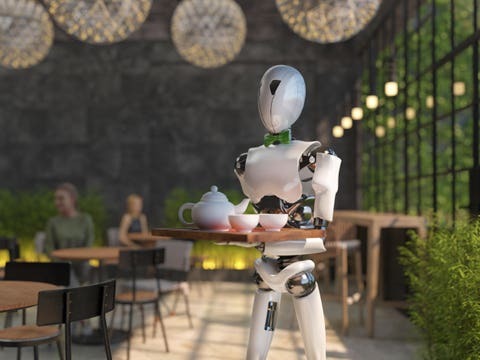
For a moment, it looked like the future had arrived.
Images and videos circulating online appeared to show humanoid robots working inside a McDonald’s restaurant—serving food, interacting with customers, and replacing human staff. The implication was clear: automation had crossed a new line.
Except it hadn’t.
According to reporting, McDonald’s is not deploying humanoid robots as workers. The footage that sparked the narrative was misleading, taken out of context, and amplified into something it was never intended to represent.
But the speed at which the story spread—and the readiness to believe it—reveals something more significant than the claim itself.
How the Narrative Took Hold
4
The idea of humanoid robots replacing fast-food workers fits neatly into a broader cultural narrative around AI and automation.
It is visually compelling. Easy to understand. And slightly unsettling.
In reality, the situation was far more mundane. The footage in question appears to have been linked to demonstrations or controlled environments rather than real-world deployment in McDonald’s restaurants.
Yet once the narrative took hold, it spread rapidly—reinforced by existing concerns around job displacement and the pace of technological change.
What McDonald’s Is Actually Doing

4
While humanoid robots are not being rolled out, automation in fast food is very real.
McDonald’s and other major chains have been steadily introducing:
- Self-service ordering kiosks
- AI-driven drive-thru systems
- Automated kitchen equipment
- Data-led operations and forecasting
These changes are less visible than humanoid robots—but far more impactful.
They streamline operations, reduce wait times, and shift how staff are deployed within restaurants. The transformation is incremental, not theatrical.
And that is precisely why it is effective.
Why the Robot Story Resonated
4
The rapid spread of the story reflects a deeper tension.
Automation is no longer a distant concept. It is already embedded across industries—from manufacturing to logistics to customer service. The idea that it could extend into everyday environments like fast food feels plausible, even inevitable.
That plausibility is what gives stories like this traction.
It is not just about whether something is true. It is about whether it feels true.
Incremental Change vs Instant Transformation
There is a gap between how technology is imagined and how it is actually deployed.
Humanoid robots represent a dramatic, visible shift—something that signals a clear break from the present. But in practice, most technological change happens gradually, layered into existing systems over time.
In fast food, that means:
- Smarter ordering systems
- More efficient kitchens
- Better data integration
Not robots walking the floor.
At least, not yet.
The Bigger Picture
The McDonald’s robot story may not be real—but it is not irrelevant.
It highlights how quickly narratives around AI and automation can take shape, and how closely they align with public perception of the future.
More importantly, it underscores a simple truth:
The future of work is changing.
Just not always in the ways we expect.
Because while humanoid robots capture attention, it is the quieter, less visible technologies that are already reshaping how industries operate—and how people work within them.