


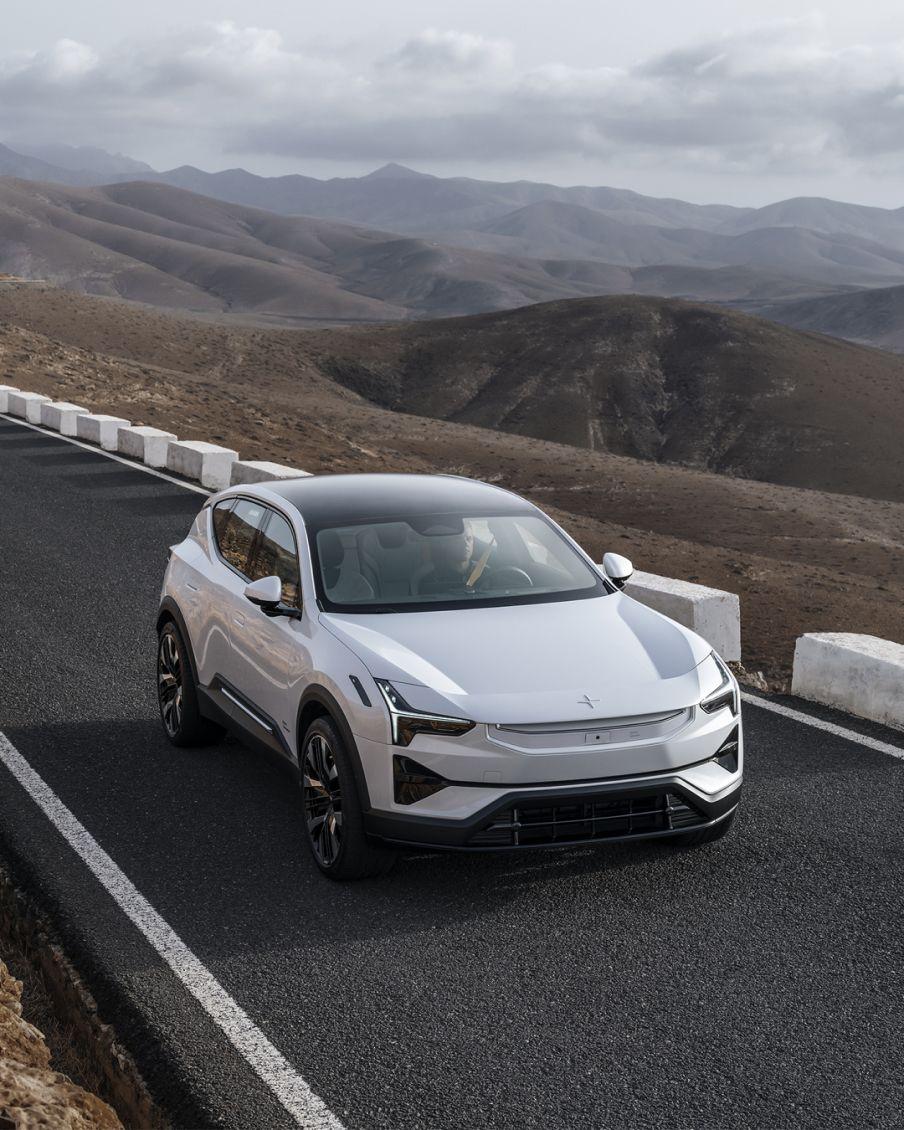
At first glance, very little appears to have changed with the latest iteration of the Polestar 3. The design remains restrained, defined by Scandinavian minimalism, but beneath that familiar surface the 2026 update represents something far more substantial. This is not a cosmetic refresh but a fundamental reworking of the car’s underlying technology. The shift to an 800-volt electrical architecture brings it into line with the most advanced electric vehicles on the market, transforming both performance and usability. Charging speeds now exceed 300kW, reaching up to 350kW in optimal conditions, allowing a 10–80% charge in roughly 22 minutes. It is, in many ways, the upgrade the car always needed.
More Power, More Pace — and More Confidence


The benefits extend beyond charging. Power outputs have been increased across the range, with the Performance model now delivering up to 680hp and reaching 0–100 km/h in just 3.9 seconds. Even the dual-motor variant strikes a compelling balance, pairing strong performance with a claimed range of up to around 647km. On the road, this translates into a vehicle that feels more assured and capable, retaining its positioning as a driver-focused EV. It remains composed, fast and refined, leaning towards engagement rather than isolation, though it is here that the narrative begins to shift.
The Trade-Off: When Technology Comes at a Cos
For all its technical progress, the 2026 update introduces a compromise that is difficult to ignore. The transition to the new electrical architecture, along with associated hardware changes, has added weight and complexity. As a result, while straight-line performance and efficiency have improved, there is a noticeable softening in driving dynamics. The car is quicker and more advanced, but slightly less engaging at the limit. This is not a dramatic shift, but it is a meaningful one. The sharp edge that once defined the driving experience has been softened, signalling a broader move towards refinement over raw engagement.
Familiar Design, Smarter Execution
Polestar has chosen not to visually differentiate this updated model, reinforcing the idea that progress here is largely invisible. Inside, the experience is refined but familiar. Build quality remains strong, space is generous, and the minimalist design continues to prioritise clean surfaces and digital interfaces. Processing power has been improved, making the infotainment system more responsive, though the continued reliance on digital controls over physical inputs remains a point of debate. It is a cabin that feels modern and premium without being radically different from what came before.
Range, Reality and Everyday Use
The battery setup remains broadly unchanged, with a 92kWh unit for the rear-motor version and 106kWh for dual-motor models. Real-world efficiency will naturally vary, but the improvements in charging speed arguably matter more than marginal gains in range. In practical terms, the ability to recharge quickly and reliably defines usability in an electric vehicle, and here the Polestar 3 now feels far more competitive. This reflects a wider shift across the EV market, where charging infrastructure and speed are becoming just as important as outright range.
A More Complete EV — But a Different One
There is a quiet irony at the heart of the 2026 Polestar 3. By most objective measures, it is a better car. It is faster, more advanced and more usable, with the move to 800-volt technology placing it firmly among the leading electric SUVs in its class. Yet in becoming more complete, it has also become slightly less distinctive. The original appeal lay in its balance, offering a premium SUV that still felt genuinely engaging to drive. The latest version leans more heavily into technology, efficiency and refinement, a direction that will suit most buyers but may feel like a subtle loss of character to others.
The Verdict
The 2026 Polestar 3 evolves significantly beneath the surface. It is now a far more capable long-distance EV, with charging speeds and performance that meet the expectations of a modern premium SUV. The trade-off is nuanced rather than dramatic, a slight dilution of dynamic sharpness in exchange for a meaningful leap in usability and technology. Whether that feels like progress or compromise depends entirely on what is valued most. For the wider market, the direction is clear. For Polestar, the question is more philosophical: is the future of performance defined by how a car drives, or by how intelligently it works?