


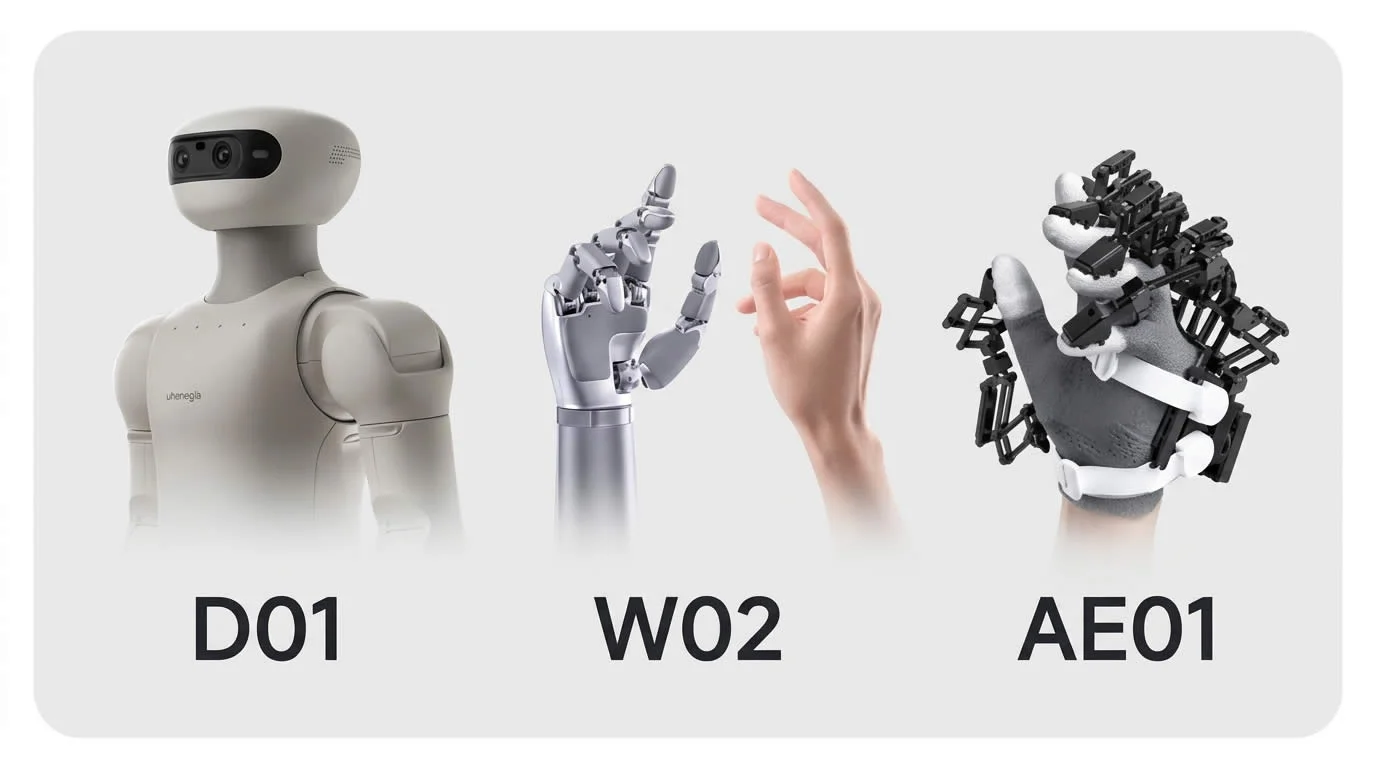
PITTSBURGH — September 2026: AI robotics company Sharpa has unveiled three new flagship products at the IEEE/RSJ International Conference on Intelligent Robots and Systems (IROS) 2026 in Pittsburgh, bringing together robotic manipulation, tactile sensing and human motion capture in a single technology portfolio.
The company has introduced D01, an integrated tactile-sensing robot designed for dexterous manipulation; W02, a compact dexterous robotic hand with full-hand tactile sensing; and AE01, a haptic exoskeleton data glove designed for teleoperation and robot-learning data capture.
Together, the products target three increasingly important challenges for robotics: enabling robots to carry out complex physical tasks, allowing them to sense and respond to contact with objects, and capturing the human demonstrations that can help train robots to perform those tasks.
Sharpa is demonstrating the new technology at Booth 514 at the David L. Lawrence Convention Center in Pittsburgh, with the IROS exhibition running through September 30.
Moving Beyond Robots That Simply Move
For years, industrial robotics has largely focused on structured environments where machines can perform highly repeatable tasks under controlled conditions.
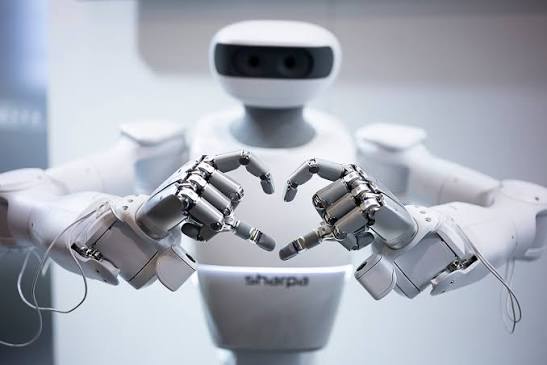
The challenge becomes considerably harder when robots have to operate in environments designed for people.
Everyday objects vary in shape, weight and texture. Tools need to be gripped from different angles. Objects can slip, deform or move unexpectedly. A robot therefore needs more than visual recognition and mechanical movement: it needs the ability to understand physical contact and adjust its actions accordingly.
This is the area Sharpa is targeting with its latest product lineup.
Rather than introducing three unrelated pieces of hardware, the company is positioning D01, W02 and AE01 as parts of a broader robotics stack covering execution, tactile perception and data collection.
D01 Brings Tactile Sensing Across the Robot
At the centre of the announcement is D01, which Sharpa describes as an integrated robot designed specifically for dexterous manipulation.
The platform combines Sharpa Wave dexterous hands with seven-degree-of-freedom arms and electronic skin covering the robot’s body.
The combination is designed to allow D01 to undertake movements requiring speed and precision while also responding to physical contact.
According to Sharpa, D01 has an approximately 1:1 arm payload-to-weight ratio, an end-effector speed exceeding 10.5 metres per second, a communication frequency of 1,000 Hz and end-effector repeatability of 0.2 millimetres.
Its spherical wrist joints are also built around a human-scale configuration, allowing the robot to work in spaces and around tools originally designed for people.
One of the more significant elements of D01 is its tactile sensing.
The robot’s electronic skin is designed to detect contact across its body, providing another layer of information beyond conventional visual sensing.
Sharpa states that the tactile system operates at a sampling rate of 100 Hz, with a force resolution of 0.2 newtons.
The objective is to allow the robot to react when contact occurs, whether that means interacting with an object, responding to an unexpected collision or adjusting its grip during a manipulation task.
This type of physical feedback could become increasingly important as robotics moves from controlled industrial environments towards more dynamic workplaces and eventually consumer-facing applications.
W02 Puts Full-Hand Tactile Sensing Into a Smaller Package
Alongside D01, Sharpa has unveiled W02, its next-generation dexterous robotic hand.
The hand incorporates 21 active degrees of freedom while weighing less than 750 grams, according to the company.
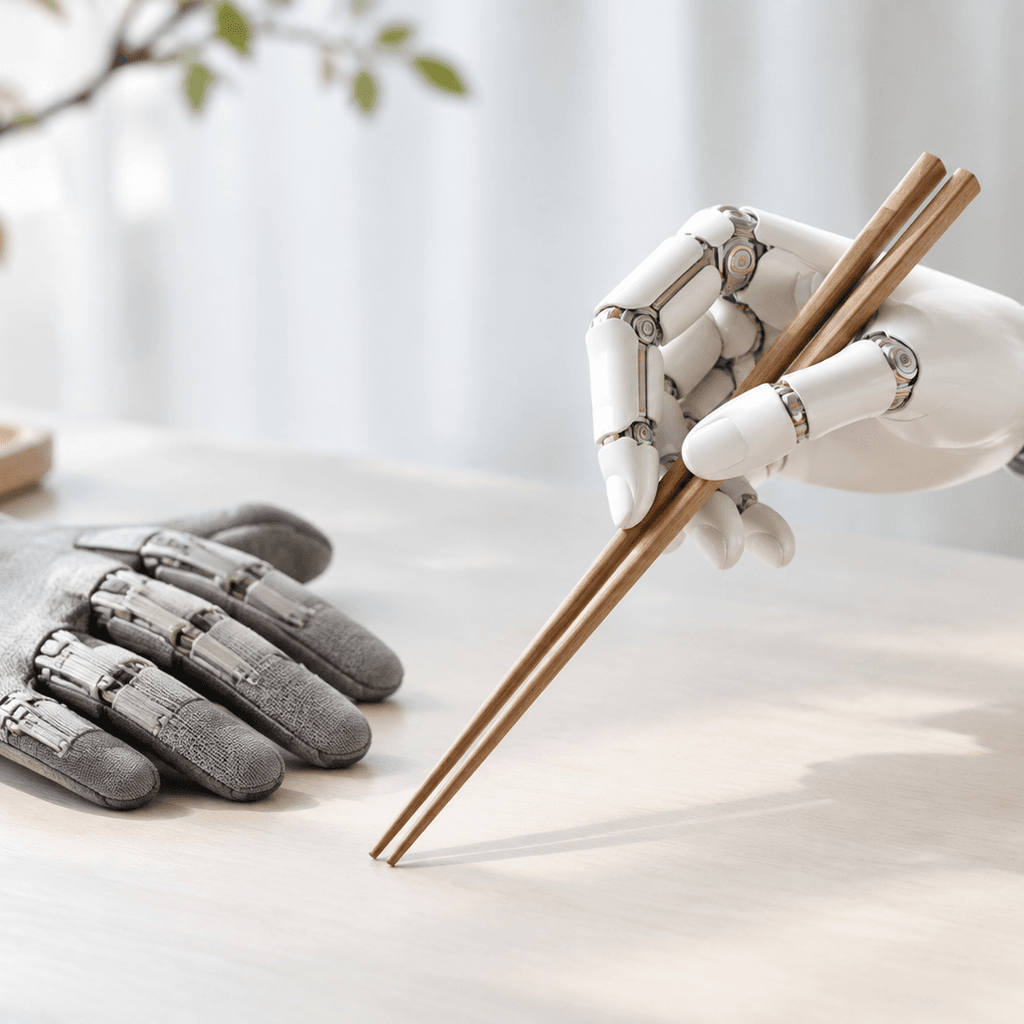
Its compact design is intended to reduce the physical load placed on a robot’s forearm while allowing the hand to operate in environments built around human dimensions.
That could be particularly relevant for robots expected to use existing tools and equipment rather than requiring completely redesigned workspaces.
W02 combines Sharpa’s Dynamic Tactile Array at the fingertips with electronic skin covering much of the fingers and palm.
The fingertip sensing system has a stated force range of 5 millinewtons to 30 newtons, with a spatial resolution of 1 millimetre.
The electronic skin provides additional tactile coverage, with a force range of 0.1–20 newtons and a spatial resolution of 5 millimetres.
The result is a hand designed to sense not only what it is holding, but also how that object is being contacted.
Sharpa also highlights W02’s zero-gap grasping capability, which is designed to help the hand handle narrow objects such as chopsticks and fine cords.
The hand carries an IP54 rating for protection against dust and water splashes, opening the possibility of deployment in a wider range of practical environments.
From Manipulation To Robot Learning
The third product in the portfolio takes a different approach.
AE01 is a high-fidelity haptic exoskeleton data glove designed to capture human hand movements and translate them into information that can be used for robot control and training.
The system incorporates 22 encoders to capture the operator’s hand movements.
This allows human actions to be recorded and mapped to a robot in real time, creating a potential bridge between human demonstrations and robotic manipulation.
The glove also provides dynamic haptic feedback at the fingertips, with Sharpa stating that it delivers 256 levels of continuous feedback.
For an operator controlling a robot remotely, this can provide information about grasping force and contact conditions that would otherwise be difficult to perceive from visual information alone.
AE01 is therefore aimed at more than teleoperation.
The captured demonstrations can also provide data for developing robot-learning systems, potentially helping researchers and developers build datasets based on real human manipulation.
Why Human Demonstrations Matter
The development of increasingly capable physical AI systems has created a parallel challenge: robots need large amounts of high-quality physical interaction data.
A robot can be trained to recognise an object visually, but recognising an object is very different from successfully picking it up, manipulating it and using it as part of a longer sequence of actions.
Human demonstrations offer one way of bridging that gap.
People instinctively adjust their grip, pressure and movement when an object starts to slip or when a task does not proceed as expected.
Capturing those movements, together with tactile information, can provide robotics developers with richer data for training future systems.
AE01 is designed around precisely this idea, combining motion capture and haptic feedback into a wearable interface.
Sharpa says the glove is designed to operate without additional user calibration and to resist environmental interference from factors including electromagnetic fields, lighting, humidity and temperature changes.
That is intended to make data collection less dependent on laboratory conditions.
A Complete Hardware Stack For Dexterous Robotics
Taken together, D01, W02 and AE01 illustrate Sharpa’s broader approach to robotic manipulation.
D01 provides the physical platform.
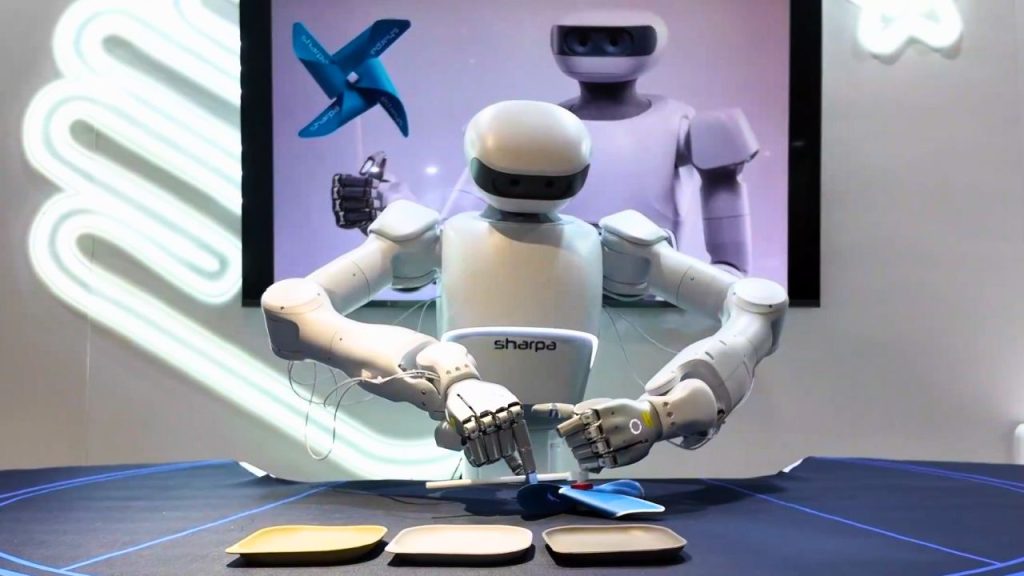
W02 provides a compact, tactile robotic hand capable of interacting with objects.
AE01 provides an interface for humans to demonstrate movements and generate data that can subsequently support robot learning.
The three products therefore address different stages of the same problem: how to give robots the physical capability and information needed to operate in the real world.
This is particularly relevant as the robotics industry increasingly explores physical AI and general-purpose robotic systems.
Rather than limiting robots to predetermined industrial movements, developers are working towards machines that can adapt their actions to changing objects, environments and tasks.
Tactile sensing could play an important role in that transition because physical interaction cannot always be understood through cameras alone.
From Factories To Human Environments
Sharpa’s stated objective is to develop robotic systems capable of operating in environments created for humans.
That includes the ability to use everyday tools rather than requiring specialist robotic equipment.
The potential applications extend across industrial environments, research and development, food service and other settings where robots may need to interact with physical objects in unpredictable ways.
The company has previously demonstrated its focus on dexterous manipulation and says its longer-term ambition is to develop general-purpose robotic systems capable of assisting people with repetitive and physically demanding work.
The latest products represent another step towards that objective by bringing the robot, its tactile sensing and the human demonstration process closer together.
The Next Phase Of Physical AI
The announcements at IROS 2026 reflect a wider shift within robotics towards systems that can combine perception, movement, touch and learning.
The ability to see an object is only one part of manipulation. A capable robot must also understand how much force to apply, whether an object is moving, whether its grip is secure and how its actions should change when circumstances shift.
That makes tactile sensing, dexterous hands and high-quality training data increasingly important components of the physical-AI ecosystem.
With D01, W02 and AE01, Sharpa is attempting to address each of those areas through a connected hardware portfolio.
The company is showcasing all three products at IROS 2026 in Pittsburgh through September 30, giving researchers, robotics companies and other visitors an opportunity to see the technology demonstrated in person.
As robotics moves beyond highly structured environments, the ability to interact with the physical world rather than simply navigate it is likely to become an increasingly important part of the technology’s development.
Source: Sharpa / PR Newswire