


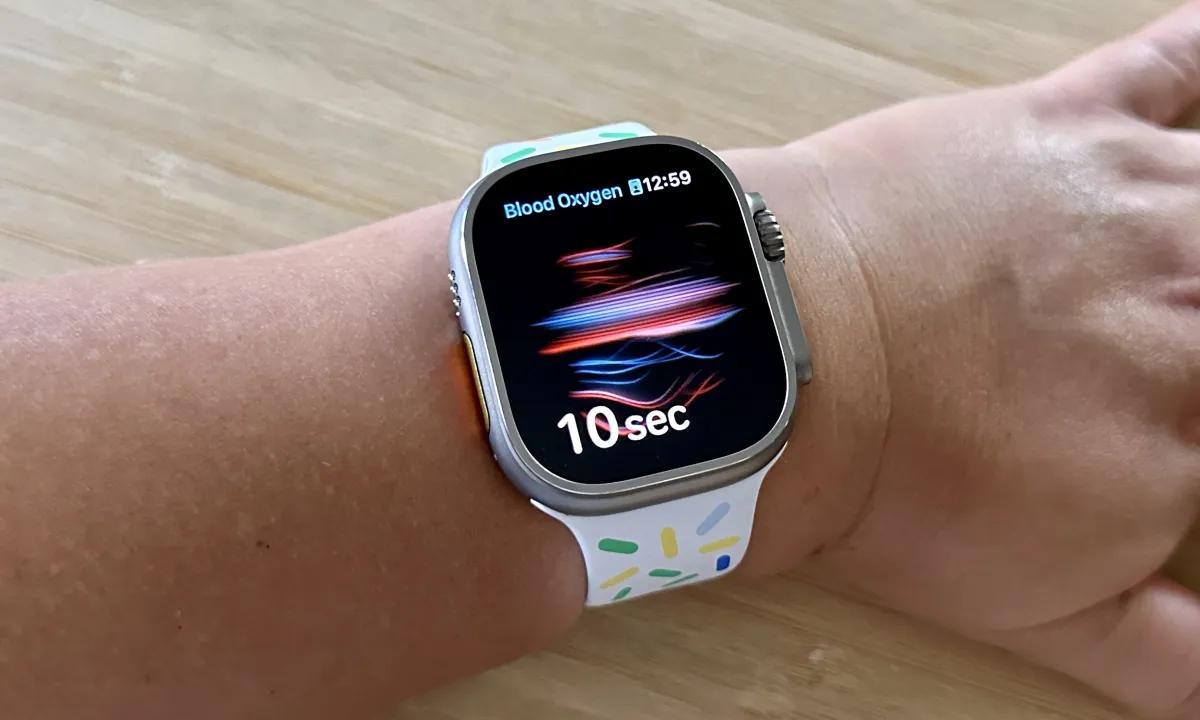
Good news for Apple Watch users in the U.S.—the blood oxygen (SpO₂) monitoring feature is returning to affected models…kind of. Through a new software update, the feature is reintroduced—but with a twist that fundamentally alters the user experience.
What’s Changing?
Apple’s latest update—iOS 18.6.1 for iPhones and watchOS 11.6.1 for the Apple Watch—reactivates blood oxygen tracking for the Apple Watch Series 9, Series 10, and Ultra 2 sold in the U.S. within the past year. Previously disabled due to a patent dispute with Masimo, the redesigned implementation now requires users to view SpO₂ readings via the Health app on their iPhone, under the “Respiratory” section, rather than directly on the watch face.
Why the Rollercoaster?
In October 2023, the U.S. International Trade Commission (ITC) ruled in favor of medical tech firm Masimo, accusing Apple of infringing on pulse oximetry patents. This prompted Apple to disable SpO₂ monitoring on new Watch units and led to a temporary U.S. import ban.
Apple then “redesigned” the feature to comply with legal constraints, effectively processing data on the iPhone instead of the watch—a workaround that U.S. Customs approved.
What’s the User Impact?
- Pros:
- U.S.-based owners of recent models regain access to blood oxygen data.
- The Health app offers a centralized place for respiratory health insights.
- Cons:
- No longer visible on your wrist—a significant departure from previous seamless access.
- Requires coordination between devices and familiarity with Health app navigation.
As TechRadar succinctly puts it: “The updated feature now requires a paired iPhone to process and display the data in the Health app… rather than directly on the watch.”

Industry Take & Context
This restored–but reengineered–feature underscores the growing tension between innovation and regulation in the wearable tech arena. Companies like Whoop and Samsung are also grappling with how to offer health-related features without running afoul of medical-device regulations.
Summary Table
| Aspect | Details |
|---|---|
| Affected Models | Apple Watch Series 9, Series 10, Ultra 2 (U.S. units post-ban) |
| Availability | Enabled via iOS 18.6.1 and watchOS 11.6.1 updates |
| How It Works Now | SpO₂ data gathered by Watch, calculated and displayed on iPhone |
| Prior Behavior | Displayed directly on Watch face via Blood Oxygen app |
| Why the Shift? | Legal workaround due to Masimo patent ruling and ITC import ban |
Bottom line: Apple’s return of blood oxygen tracking is a clever legal and technical workaround—but it’s no longer the seamless wrist-based experience users enjoyed before. It’s a stopgap: restoring functionality while navigating complex patent terrain. For a future where health features return fully integrated on-device, industry watchers will be watching Apple’s—and its competitors’—next steps closely.