


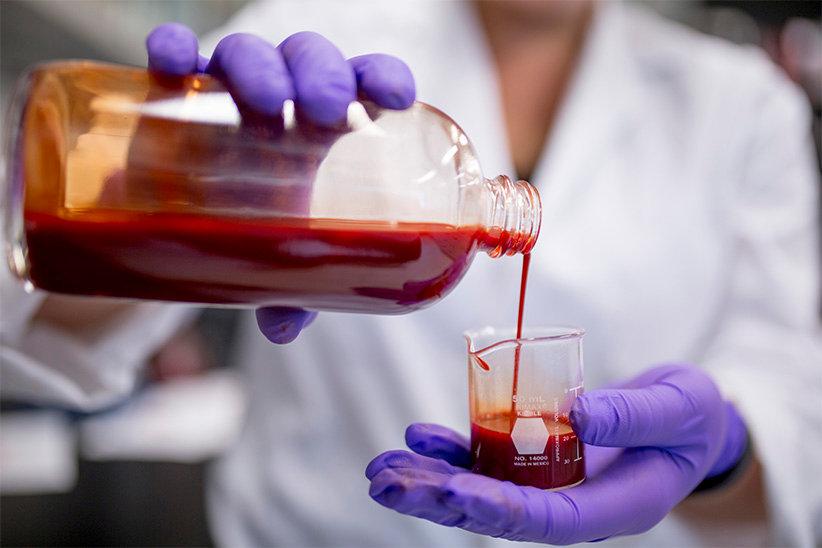
In a major crossover of biotech and emergency medicine, researchers are edging ever closer to synthetic blood solutions that could dramatically transform trauma care™, particularly in scenarios where fresh blood isn’t available fast enough

The Technology Behind the Headlines
Decades of research into artificial blood have hit many roadblocks—yet a recent NPR‑reported breakthrough reveals promising progress in replicating blood’s life‑saving properties. At the centre of attention are synthetic platelets, engineered hydrogel nanoparticles infused with antibody fragments that bind specifically to fibrin, the crucial clot‑forming protein at injury sites
“It was really important for us to mimic features of natural platelets… they can change shape… encouraging clot retraction,” explained Dr. Ashley Brown, the lead biomedical researcher driving the project
These engineered platelets feature:
- A squishy, deformable hydrogel core mirroring natural platelet behavior.
- Antibody fragments targeting fibrin to ensure precision delivery.
- A mechanism for renal clearance—they stretch through tiny pores and exit via the kidneys, unlike natural platelets that accumulate in the liver
Real-World Impact: Animal Trials Show Promise
In preclinical trials involving mice, rats, and pigs, the synthetic platelets significantly reduced bleeding and improved wound healing compared to controls:
- In mice with liver injuries, treated animals showed minimal blood loss and smaller wounds after a week.
- In pigs (the gold standard preclinical model), platelets homed to injury sites, decreased hemorrhage, caused no immune reactions, and were excreted within hours
“These results were… a total surprise when we first discovered it,” said Brown, reflecting on the unexpected enhancement of fibrin generation by the synthetic platelets
Scalability & Deployment: The Next Frontier
Brown and her colleague Dr. Seema Nandi have founded SelSym Biotech to propel their innovation toward real-world use. With support from an NIH-funded Small Business Technology Transfer (STTR) grant, the team will focus on scaling manufacturing, conducting stability tests, and initiating clinical trials within about two years
Looking ahead, Dr. Ronald Warren of NHLBI notes that synthetic platelets could equalize quality disparities in donated blood and accelerate response times in life‑threatening situations
Expected benefits include:
- Freeze-dried formulations for ambulances and battlefield med kits.
- Liquid suspensions for hospital-based use.
- Shelf life far exceeding the five‑day limit of standard platelets.
Why It Matters to the Tech Community
This isn’t just biotech—it’s deep tech: integrating nanoparticle engineering, immunochemistry, and biocompatible materials. The platform echoes innovations in drug delivery, smart biomaterials, and synthetic biology.
The hydrogel‑antibody composite design could inspire:
- Next-gen field‑portable critical care kits.
- Stable inventory of universal blood substitutes.
- Algorithms pairing clotting agents with patient-specific responses.
Key Quotes
- Dr. Ashley Brown: “So many people die from unnecessary bleeding injuries… I’m hopeful that this work could have a big impact”
- Dr. Ronald Warren: “By developing a new generation of treatment options for emergency medicine, this research may help improve patient outcomes while potentially reducing healthcare costs”
On the Horizon: What to Watch
| Milestone | Expected Timeline |
|---|---|
| Further animal studies & storage trials | Ongoing now |
| Freeze‑dried formula optimization | Next 1–2 years |
| Clinical trial commencement | In approximately 2 years |
| Emergency service & hospital adoption | Potentially by 2030 |
For tech-savvy readers watching biotech innovations, this work showcases how nano-engineered hydrogels + biologically targeted immunochemistry = potentially life-saving emergent tech. As synthetic biology doubles down on real-world utility, artificial blood could be one of the most tangible breakthroughs this decade.