


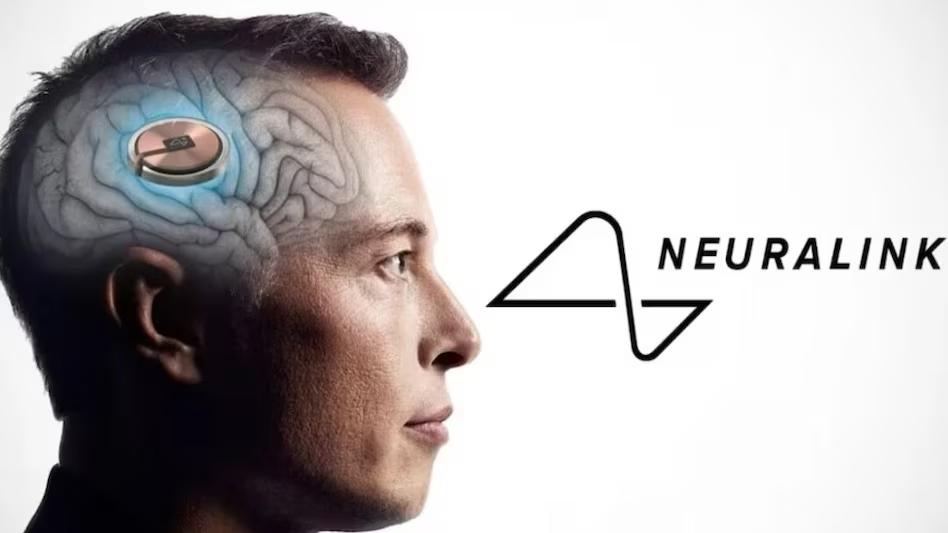
Elon Musk’s Neuralink has quietly advanced its revolutionary human trials—now with seven participants implanted with the company’s N1 “Telepathy” brain‑computer interface (BCI) chip . The implant aims to restore digital independence for individuals with paralysis or neurodegenerative conditions, while marking a major milestone for human–machine integration.
What Is the N1 Implant?
Neuralink’s coin‑sized device, designed for thought‑controlled digital interaction, sits flush with the skull and connects to the motor cortex via ultra‑thin, flexible threads. These threads carry neural signals through billions of electrode spikes, interpreted by the implant and transmitted wirelessly to computers or external devices.
According to the company, the implant and its robotic insertion system are part of the PRIME (Precise Robotically Implanted Brain‑Computer Interface) clinical trial, geared toward detecting safe neural telemetry and improving functionality for people with cervical spinal cord injuries or ALS.
From Three to Seven Participants
Neuralink recently disclosed growth in its trial cohort—from three to seven participants over the past few weeks. This marks a rapid scale‑up of its clinical efforts, reflecting strong progress in safety approvals from the U.S. FDA and planned expansion to trials in Canada, the UK, and the UAE.
Voices from the Field
Elon Musk, speaking about N1’s capabilities, said:
“Enables control of your phone or computer, and through them almost any device, just by thinking” .
First recipient, Noland Arbaugh, who became quadriplegic after a diving accident, expressed cautious optimism:
“My brain is the last part of myself that I really feel I have control over.” Data from Arbaugh’s implanted chip even allowed him to play chess and digital games via thought-controlled cursor movement .
Watch: Neuralink in Action
The Promise – and the Controversy
Pros:
- Restored autonomy: Users can manipulate digital devices without physical input—a step toward independence for individuals with paralysis.
- Technical progression: The N1 shows stable wireless connectivity and thought-to-device precision.
- Global momentum: Expansion of clinical sites and trials indicates a push toward broader adoption and scalability.
Risks & scrutiny:
- Ethical concerns: Neuralink’s animal testing, especially involving monkeys, has sparked criticism over trials causing suffering or fatal outcomes.
- Technical uncertainty: Cases of electrode thread retraction in Arbaugh’s implant suggest hardware reliability issues—though software workarounds have helped partially restore function.
- Long‑term safety: The FDA has highlighted open questions regarding biocompatibility, implant removal, and electrical heating risks .
🔭 What Lies Ahead
- Trial expansion – with more participants gaining implants in North America and beyond.
- Feature rollout – including fine motor control media, cursor navigation, and potential robotic limb operation.
- Next-gen capabilities – Neuralink’s experimental “Blindsight” implant aims to restore vision by stimulating the visual cortex, and may enter human trials soon .
Final Word
Neuralink’s leap from three to seven human implants represents a breakthrough in brain–machine interfaces. While the tech shows real-life user applications—from device control to game interaction—the journey ahead is filled with safety, ethical, and technological hurdles. Still, as early recipients like Arbaugh rediscover autonomy, this feels like a turning point on the path to direct mind-to-machine communication, with far-reaching implications for medicine and the future of human cognition.