


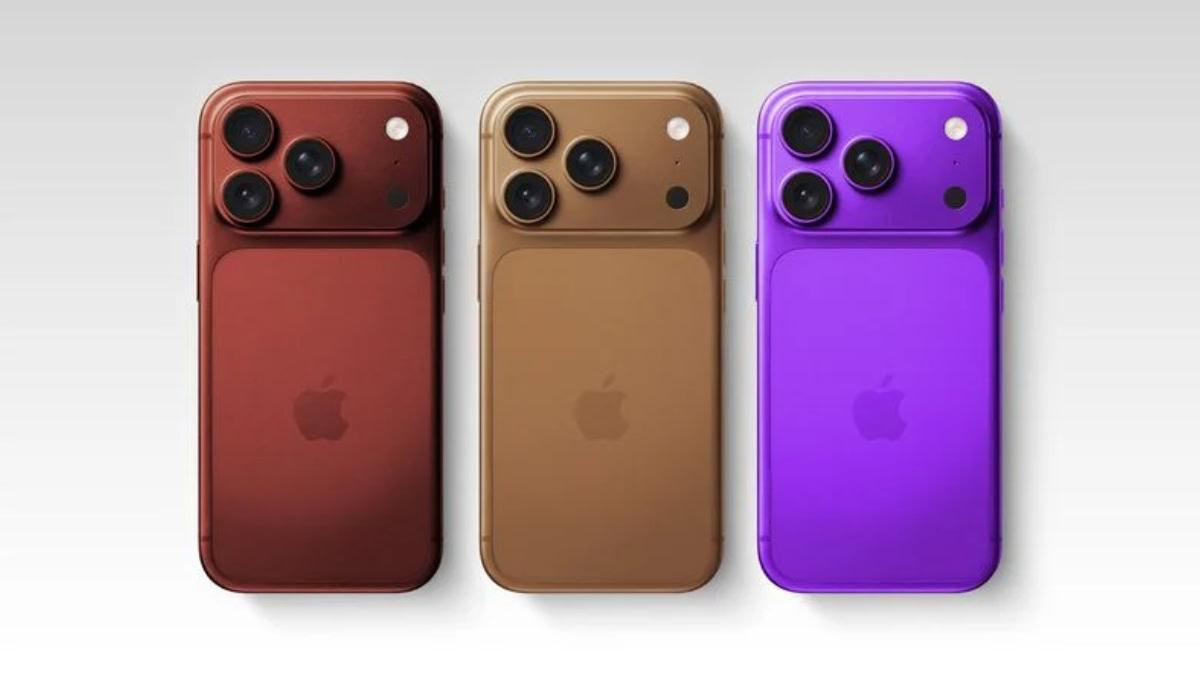
For years, smartphone launches have followed a predictable cycle. Faster chips, brighter displays, slightly improved cameras and increasingly polished software ecosystems have dominated the conversation. But the latest leaks surrounding the upcoming iPhone 18 Pro suggest Apple may once again be shifting focus toward something more emotional: design identity.
New leaked video renders and case images reportedly reveal several new colour variants for Apple’s 2026 flagship lineup, alongside subtle refinements to the physical design language expected to define the next generation of premium iPhones. According to reports circulating online, Apple appears to be exploring darker metallic finishes, richer titanium-inspired tones and more expressive colour options aimed at differentiating the Pro lineup visually in a market where smartphone hardware has increasingly begun to look interchangeable.
That matters more than it may initially seem.
For much of the smartphone industry, hardware innovation has entered a stage of maturity. Consumers are upgrading devices less frequently, performance gains feel incremental and software ecosystems have become deeply entrenched. In that environment, industrial design and emotional connection are becoming commercially critical again.
Apple understands this better than almost any technology company.

The leaked imagery suggests the iPhone 18 Pro lineup could lean further into premium metallic aesthetics, potentially building on the titanium framework introduced in previous Pro generations. Reports indicate Apple may introduce deeper graphite finishes, bronze-inspired metallic tones and darker blue variants designed to create a more luxury-focused appearance compared to the softer colour palettes of recent years.
Whether all of the leaks ultimately prove accurate remains unclear, but the broader direction aligns with Apple’s recent product strategy.
Across multiple categories, from MacBooks to Apple Watches, the company has increasingly focused on material feel, finish quality and lifestyle positioning rather than purely technical specification wars. Devices are being marketed less as gadgets and more as premium personal objects that integrate into identity, fashion and daily culture.
That shift is especially important in the ultra-premium smartphone segment.
Consumers spending flagship-level prices increasingly expect devices to feel aspirational beyond raw performance alone. The smartphone has become the single most personal technology product most people own. It is visible constantly, carried everywhere and deeply tied to personal image and lifestyle presentation.
Design therefore becomes part of the purchasing psychology.
Apple’s Pro lineup has historically balanced minimalism with recognisable premium cues, but recent competitors have aggressively pushed more experimental finishes, foldable form factors and distinctive industrial identities. Samsung, Xiaomi and Honor have all expanded their visual design experimentation across flagship products, increasing pressure on Apple to maintain a strong emotional differentiation advantage.
The iPhone 18 Pro leaks suggest Apple may be preparing to respond carefully rather than radically.

Rather than reinventing the form factor entirely, the company appears focused on refining familiarity. Slightly thinner bezels, revised camera housing details and updated colour treatments reportedly form the core of the visual changes seen in leaked renders and accessory mockups.
This reflects Apple’s wider philosophy toward industrial design evolution.
The company rarely pursues abrupt hardware redesigns without strategic reason. Instead, Apple tends to iterate slowly, allowing each generation to feel refined rather than dramatically experimental. That consistency has helped the iPhone maintain one of the strongest product identities in consumer technology for nearly two decades.
Yet the market around it is changing rapidly.
Artificial intelligence integration is becoming central to smartphone ecosystems, camera hardware is nearing professional-grade quality and mobile gaming continues evolving into a major entertainment category. As functionality converges across manufacturers, visual identity and ecosystem experience become increasingly decisive factors for consumers.
Apple’s challenge is maintaining desirability while avoiding design stagnation.
The leaked iPhone 18 Pro imagery suggests the company may be trying to walk that line carefully. By enhancing finishes and introducing richer colour identities while maintaining the instantly recognisable iPhone silhouette, Apple can modernise the product without alienating existing users accustomed to its design language.
There is also a broader luxury positioning element emerging across Apple’s strategy.
Over the last several years, the company has steadily elevated the Pro branding across its ecosystem. Pro no longer simply means higher specifications. It increasingly represents premium materials, exclusivity and lifestyle positioning. Titanium finishes, aerospace-inspired materials and minimalist industrial design all reinforce that perception.
The smartphone market itself is increasingly behaving more like fashion and luxury retail.
Consumers are now choosing devices partly based on aesthetics, colour palettes and personal style compatibility rather than purely processor benchmarks. Limited editions, premium materials and colour exclusivity all contribute to brand perception in ways that mirror luxury watchmaking or automotive design.
Apple has historically excelled at understanding those emotional dynamics.

The reported colour expansion for the iPhone 18 Pro also reflects wider consumer demand for personalisation within premium technology. While minimalism remains central to Apple’s identity, users increasingly expect devices that feel visually distinctive without sacrificing elegance.
Darker metallic finishes and richer tones achieve that balance effectively.
They retain professionalism while introducing more personality into the hardware itself. That may particularly appeal to younger luxury consumers who increasingly view technology products as extensions of personal branding rather than simply utility devices.
Beyond aesthetics, the leaks also continue speculation around Apple’s broader hardware roadmap for 2026.
Industry analysts continue expecting deeper AI integration, upgraded computational photography systems and potential battery efficiency improvements across the iPhone 18 lineup. While the latest leak primarily focuses on exterior design and colour variants, the visual changes may signal Apple’s intention to reposition the next Pro generation as a more lifestyle-oriented flagship experience overall.
Whether the final retail devices ultimately match the leaked renders remains uncertain. Apple’s product development process is famously secretive, and pre-release case designs are not always fully accurate indicators of final hardware.
However, the reaction online already highlights something important.
Consumers are once again becoming excited about smartphone design itself.
After years dominated by technical specification comparisons, aesthetics, materials and emotional appeal are re-entering the centre of flagship smartphone conversation. In many ways, that may represent the next phase of premium mobile competition altogether.
And if the iPhone 18 Pro leaks prove accurate, Apple appears determined to lead that shift rather than follow it.