


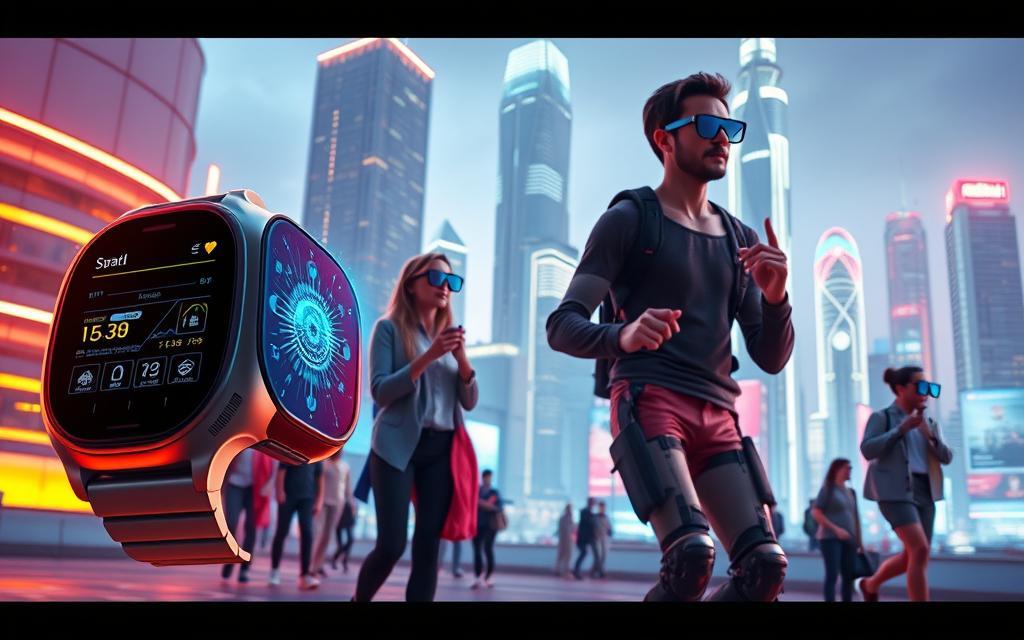
For years, wearable robotics and exoskeleton technology existed largely within laboratories, rehabilitation centres and science-fiction concepts. But that future is now beginning to move into the real world — and in some cases, into some of the most physically demanding environments imaginable.
A recent first-hand experience hiking the Grand Canyon using robotic leg technology has reignited attention around how wearable mobility systems could dramatically transform the lives of people dealing with injury, aging and mobility limitations. The experience reportedly allowed the user to complete demanding terrain without relying on a walking cane, highlighting how quickly assistive robotics are evolving beyond experimental prototypes into genuinely usable human enhancement systems.

Exoskeletons Are Moving Beyond Rehabilitation
Historically, robotic mobility systems were primarily designed for medical recovery and physical therapy. Early exoskeletons focused heavily on helping patients regain movement following spinal injuries, neurological conditions or major surgeries. But the technology is now evolving much further.
Modern robotic leg systems increasingly use lightweight motors, AI-assisted movement analysis and adaptive support systems capable of responding dynamically to terrain and body movement in real time. Instead of simply replacing lost mobility, many newer systems aim to enhance endurance, reduce fatigue and improve physical stability during demanding activity. This represents a major philosophical shift. The future of wearable robotics may not be limited to disability assistance alone. It may eventually extend into mainstream human augmentation, helping users walk longer distances, climb more efficiently and reduce physical strain during work or outdoor activity.
That possibility is attracting enormous interest across healthcare, sports performance and consumer technology sectors simultaneously.
AI Is Making Wearable Robotics More Natural
One reason robotic mobility systems are improving so rapidly is the advancement of AI-assisted movement analysis. Modern exoskeletons increasingly rely on sensors and machine-learning systems capable of interpreting gait patterns, terrain changes and body mechanics continuously while adjusting support dynamically in real time. This allows robotic assistance to feel far smoother and more responsive than earlier rigid mechanical systems.
The goal is not simply movement. It is intuitive movement.

Researchers globally are now exploring increasingly advanced robotic locomotion systems capable of adapting to unstable environments, dynamic terrain and unpredictable movement conditions. This is particularly important because natural human walking involves constant micro-adjustments that are surprisingly difficult to replicate mechanically. AI is helping close that gap by allowing systems to interpret motion patterns much more intelligently.
As processing power and sensor technology continue improving, robotic movement systems may eventually become almost seamless extensions of the human body.
Aging Populations Are Driving Massive Demand
One of the biggest forces accelerating mobility robotics is demographics. Global populations are aging rapidly, creating enormous demand for technologies capable of extending independence, reducing injury risk and improving long-term mobility. Falls, joint deterioration and reduced physical endurance represent some of the biggest health challenges facing aging societies.
Wearable robotic systems could potentially become one of the most important technological responses. Rather than requiring constant caregiving or invasive procedures, future mobility systems may help older adults maintain physical activity and independence far longer than currently possible.
This has implications far beyond healthcare itself. Longer mobility retention affects workforce participation, healthcare costs, quality of life and broader social infrastructure. Governments and healthcare systems are therefore paying increasing attention to assistive robotics as both medical and economic technologies.
Human Enhancement Is Becoming a Real Conversation
The Grand Canyon hiking example also highlights another emerging debate: where the line exists between assistance and enhancement.
If robotic systems can reduce fatigue, improve endurance and assist movement efficiently, they could eventually be used not only by individuals with mobility limitations, but also by hikers, industrial workers, military personnel and athletes. This raises fascinating ethical and cultural questions.


Human augmentation technologies are increasingly moving from science fiction into practical reality. AI-assisted prosthetics, robotic exoskeletons and biomechanical support systems all suggest a future where technology may actively enhance physical capability rather than merely restore it. That shift could fundamentally change how society thinks about aging, disability and physical performance itself.
The Technology Still Faces Major Challenges
Despite the progress, wearable robotics still face important limitations. Battery life, weight reduction, affordability and long-term comfort remain major engineering challenges. Many advanced systems are still expensive and inaccessible for widespread consumer adoption. Terrain adaptability and movement precision also continue improving but are not yet fully comparable to natural human biomechanics.
Researchers continue working aggressively on these issues. Recent academic developments across legged robotics and adaptive locomotion systems show growing focus on stability, dynamic terrain response and real-world deployment reliability. At the same time, assistive mobility technologies more broadly are becoming increasingly sophisticated. Researchers are even redesigning traditional mobility aids such as crutches using advanced biomechanical engineering to improve comfort, stability and physical performance.
The wider mobility technology ecosystem is evolving rapidly.
Robotics Is Becoming More Human-Centred
One of the most important themes emerging across robotics itself is the shift toward human-centred design. Earlier robotics development often prioritised industrial capability and mechanical power. Modern systems increasingly focus on comfort, usability, adaptability and integration into everyday life. The best robotics increasingly feel less like machines and more like intuitive extensions of human behaviour.
That applies particularly strongly to mobility technologies. The success of future exoskeletons and robotic leg systems will depend not only on engineering performance, but also on how naturally users can incorporate them into real daily life without discomfort or complexity.
This is why experiences like hiking with robotic legs matter symbolically. They demonstrate robotics operating outside controlled demonstrations and entering emotionally relatable human experiences instead.
The Future of Movement May Look Very Different
Perhaps the most striking takeaway from the rise of wearable robotics is how quickly the boundaries between biology and technology are beginning to blur. The idea of robotic systems augmenting everyday movement once felt futuristic. Now, people are beginning to hike mountains, navigate difficult terrain and regain physical confidence using wearable AI-powered assistance systems in the real world.
The long-term implications could be enormous. Future mobility may involve highly adaptive robotic systems capable of supporting aging populations, reducing workplace injuries, enhancing rehabilitation and even expanding human physical capability itself.
And as robotics, AI and biomechanics continue converging, the future of human movement may become one of the most transformative technology stories of the next decade.