



Samsung has launched its most ambitious foldable range yet as Apple reportedly prepares to enter the category for the first time, setting up a defining contest for the future of premium smartphones.
The long-running rivalry between Samsung and Apple is moving into unfamiliar territory.
Samsung has unveiled its eighth generation of foldable smartphones, introducing a redesigned Galaxy Z Fold8 alongside the larger Galaxy Z Fold8 Ultra and compact Galaxy Z Flip8. The launch strengthens Samsung’s position in a category it helped establish, but it also arrives as Apple is widely expected to reveal its first folding iPhone later in 2026.
Apple has not officially confirmed that such a device exists. However, industry reports indicate that the company is developing a book-style foldable with an external smartphone display and a larger tablet-like screen inside.
Should those reports prove accurate, the launch would create the most important new competition in foldable smartphones since the modern category emerged.
Samsung enters the contest with years of engineering experience, an established product range and a mature Android interface developed around multitasking. Apple brings an enormous premium customer base, a tightly integrated software ecosystem and the ability to turn an existing technology category into a mainstream consumer proposition.
The battle will therefore be about more than which company produces the most advanced hinge. It will determine whether foldables finally move beyond their niche position and become a central part of the premium smartphone market.
Samsung redesigns the Galaxy Fold
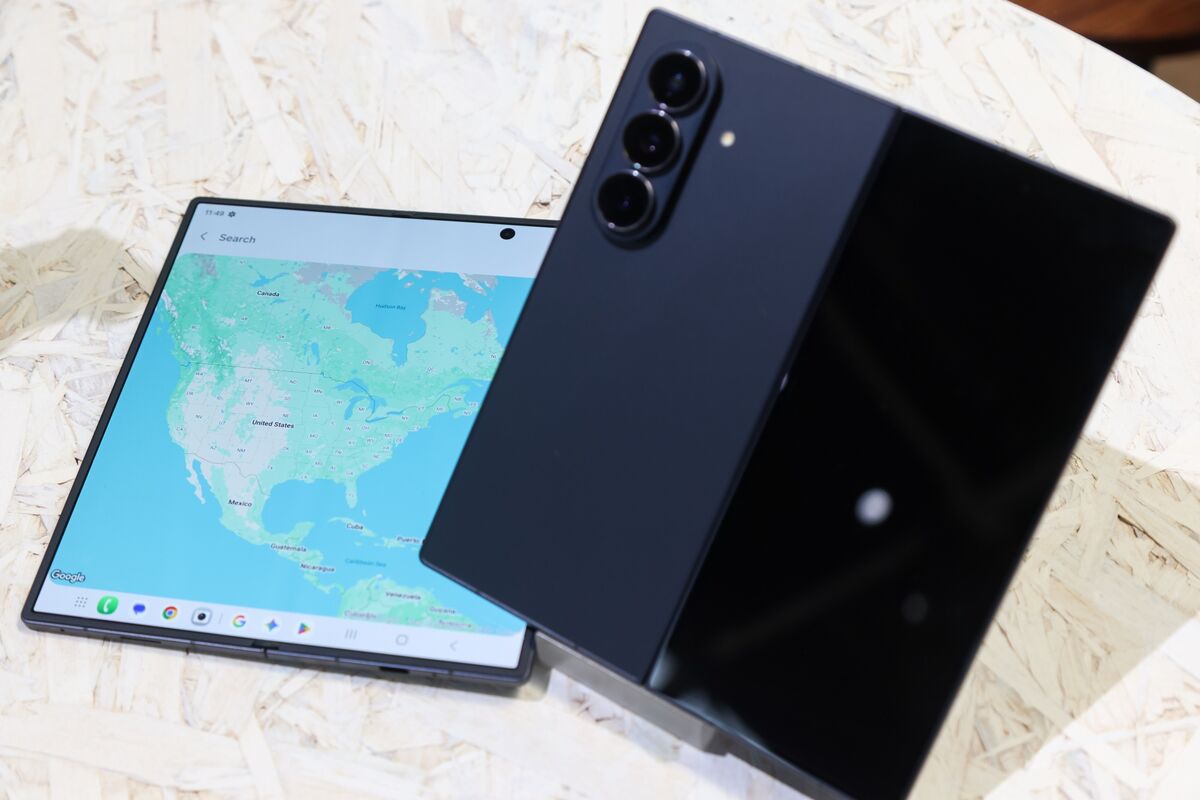
Samsung’s new Galaxy Z Fold8 introduces a shorter and wider shape intended to make the device more practical in both its folded and unfolded positions.
The standard model includes a 5.5-inch cover display and a 7.6-inch internal screen. Its revised proportions create a more conventional smartphone experience when closed and a wider canvas for video, reading and multitasking when opened.
At 201g, Samsung describes the Fold8 as its lightest Galaxy Z Fold to date. It also incorporates the company’s new Flex Titanium display structure, developed to reduce the visibility of the central crease while improving stability beneath the flexible OLED panel.
The company has placed the Fold8 between two other models. The Galaxy Z Flip8 retains the familiar compact clamshell format, while the Fold8 Ultra targets customers seeking a larger display, stronger camera system and additional battery capacity.
Samsung has priced the standard Fold8 at approximately $1,899 in the United States, with the Ultra positioned at $2,099 and the Flip8 starting at $1,199. Rising component costs contributed to higher prices across the new generation.
“Samsung’s greatest advantage is no longer simply that it sells a folding phone. It is that the company now offers several foldable shapes designed around different types of customer.”
A wider screen designed around modern content
The Fold8’s altered proportions reflect how smartphone use has changed.
Earlier book-style foldables often included narrow external displays that felt less comfortable for typing and everyday applications. Their tall internal screens were useful for multitasking but did not always make efficient use of video content.
Samsung’s new passport-like design attempts to resolve both limitations.
The Fold8 uses a 10:16 outer-screen ratio and a more tablet-like 4:3 internal display. The wider format is intended to suit vertical video when the device is closed and conventional widescreen entertainment, reading and productivity when opened.
The format also bears a striking resemblance to reports surrounding Apple’s first foldable. Industry speculation has repeatedly pointed towards a device with a 5.5-inch external display and an internal panel measuring approximately 7.8 inches.
That similarity suggests both companies may have reached the same conclusion: foldables need to feel like proper smartphones when shut and useful small tablets when opened.
Apple prepares to enter a market Samsung helped create
Samsung launched its original Galaxy Fold in 2019 and has spent the intervening years improving its hinges, flexible displays, water resistance, software and overall durability.
Apple appears to have taken the opposite approach.
Rather than entering early and refining its product publicly, the company has waited while Samsung, Huawei, Honor, Motorola, Google, Oppo and Vivo developed the market.
That delay has allowed Apple to observe the problems that limited early adoption, including noticeable screen creases, thick designs, fragile displays, awkward proportions and exceptionally high prices.
Reports indicate that Apple has concentrated heavily on reducing the crease across its internal display. Samsung Display is expected to provide folding OLED panels for the device, meaning the two rivals may simultaneously compete and collaborate through the supply chain.
The anticipated device is frequently referred to unofficially as the iPhone Fold or iPhone Ultra. Neither name has been confirmed by Apple.
Current expectations suggest a book-style design rather than a clamshell device. When closed, it would function as a compact iPhone. Opening it would reveal a larger display suited to video, reading, gaming, creative applications and multitasking.
Its reported dimensions are close to those of Samsung’s redesigned Fold8, potentially placing the two devices in direct competition from Apple’s first year in the market.
Samsung has experience, but Apple has the ecosystem
Samsung’s clearest advantage is experience.
Eight generations of Galaxy Fold development have allowed the company to understand how people use devices with two displays. Samsung has refined features including split-screen applications, floating windows, drag-and-drop controls and taskbar-style navigation.
The company also offers several physical formats, giving customers a choice between a compact flip phone, a standard book-style foldable and the larger Ultra model.
Apple, however, controls the relationship between its hardware, operating system, applications and wider product ecosystem.
A folding iPhone could work closely with the Mac, iPad, Apple Watch, AirPods and Vision Pro. Apple may also adapt iOS and elements of iPadOS to create an interface that changes intelligently as the display opens.
The success of the product could depend on whether Apple persuades developers to redesign applications for the larger internal screen. An expanded display has limited value when apps simply stretch their existing smartphone layouts.
Samsung has faced the same challenge throughout the Galaxy Fold’s development. Many Android applications now behave more effectively on larger screens, but the experience still varies between developers.
Apple’s influence over its developer community may allow it to establish more consistent standards, particularly when the same applications already have interfaces designed for both the iPhone and iPad.
Artificial intelligence becomes another dividing line
Samsung has positioned artificial intelligence at the centre of the new Fold8 generation.
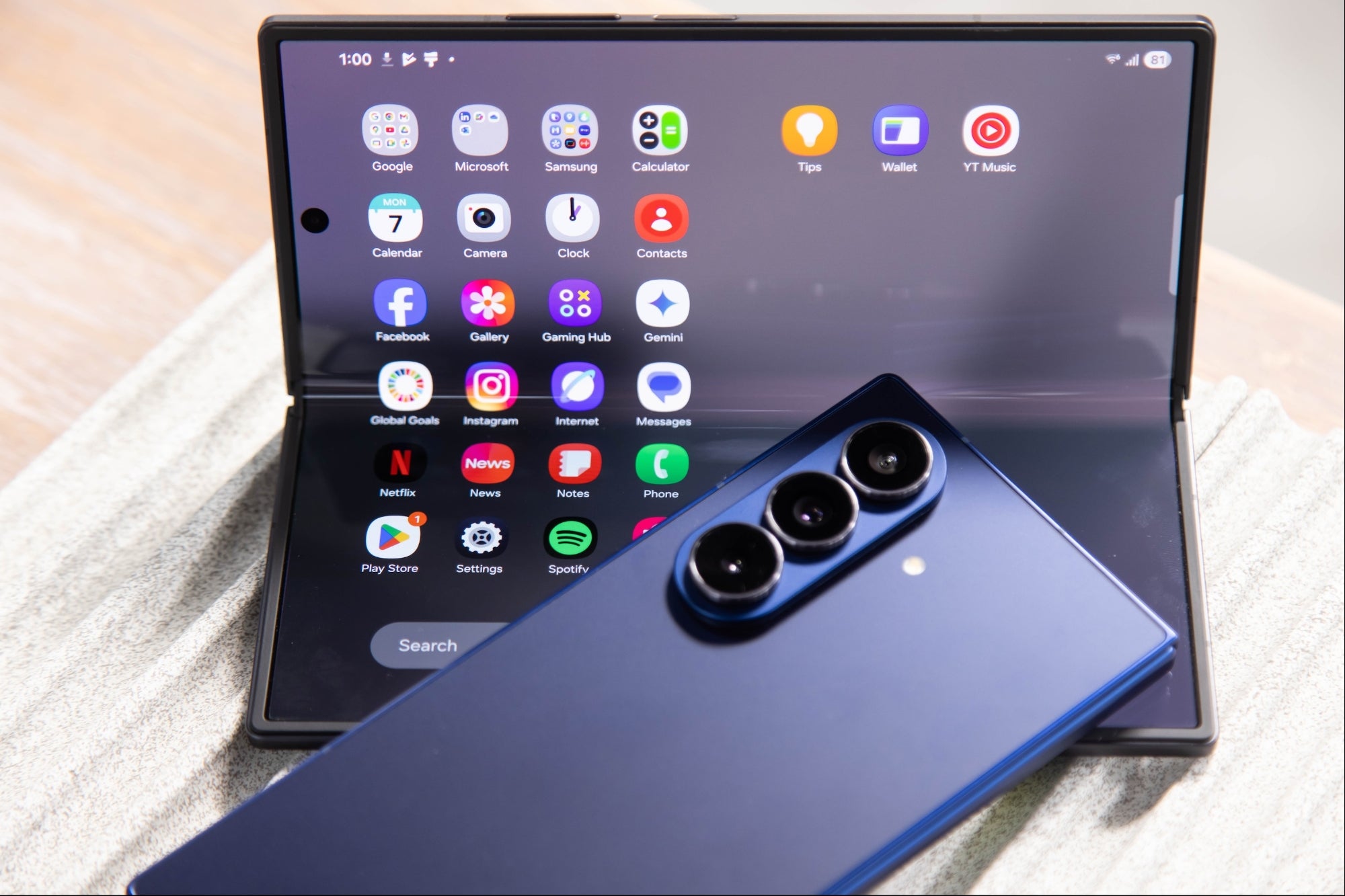
The devices use Google’s Gemini technology alongside Samsung’s Galaxy AI tools. Their larger screens allow customers to work across several applications, compare information and use AI assistance without continually switching between windows.
The Fold8 is powered by the Snapdragon 8 Elite Gen 5 for Galaxy, while the Ultra model combines the same platform with upgraded photography and battery hardware. Samsung says the processor improves CPU, graphics and on-device AI performance compared with the previous generation.
Apple is expected to build its foldable around Apple Intelligence and the company’s own processors.
This could create two different visions of an AI-enabled foldable. Samsung is closely integrating Google’s Gemini ecosystem, while Apple is likely to emphasise processing across its own hardware and software environment.
The larger displays provide an obvious canvas for AI tools. A user could keep a document open beside a generated summary, analyse an image while viewing related information or conduct a conversation with an assistant without covering the original content.
Whether these features become essential or remain elaborate demonstrations will depend on how naturally they fit into everyday work.
The crease remains the industry’s most visible compromise
Every folding smartphone must balance flexibility with durability.
The internal screen needs to bend thousands of times while continuing to display a consistent image and respond accurately to touch. Hinges must prevent debris from entering the mechanism while keeping the device thin enough to carry comfortably.
The crease running through the centre of the display remains the clearest visual reminder of that engineering compromise.
Samsung’s Flex Titanium architecture introduces titanium-based supporting elements beneath the OLED panel. The company says this produces a flatter and more stable display while maintaining the flexibility required for repeated folding.
Apple is also reported to have prioritised crease reduction, potentially viewing an obvious fold line as inconsistent with the level of refinement expected from its premium products.
The contest may therefore be decided partly by something that is difficult to communicate through specifications. Customers will need to see and touch the displays before determining whether either company has genuinely reduced the crease enough to make it disappear during normal use.
Durability will be equally important. Samsung has years of real-world data from customers, repairs and previous generations. Apple must establish confidence immediately, particularly should it charge considerably more than conventional flagship smartphones.
Price could keep foldables exclusive
Foldable smartphones remain among the most expensive consumer devices sold by the major mobile brands.
The Galaxy Z Fold8 begins at around $1,899, while estimates for Apple’s device have frequently exceeded $2,000 and in some cases approached $2,500.
At those prices, customers are not simply comparing one phone with another. They may be deciding between a foldable and a conventional flagship phone combined with a tablet, laptop or smartwatch.
Samsung can reduce the immediate impact through trade-in offers and carrier finance, but the overall cost remains substantial.
Apple’s customers have historically shown a willingness to pay for premium hardware, yet a folding iPhone priced above $2,000 would still need a clear purpose. Novelty alone may not sustain demand once the initial launch excitement passes.
A foldable must demonstrate that its larger screen changes how people work, communicate or consume entertainment. Otherwise, many buyers may conclude that a traditional smartphone remains lighter, simpler and less expensive.
A small market with growing strategic importance
Foldables remain a limited part of overall smartphone sales.
Current estimates place the category at around 1.6 per cent of the market. However, shipments are expected to increase strongly during 2026 despite a wider contraction in global smartphone demand.
IDC previously projected that Apple could capture more than 22 per cent of foldable unit sales and approximately 34 per cent of the category’s value during its first year, reflecting the high anticipated price of the device and the scale of Apple’s customer base.
Those projections remain estimates rather than guaranteed outcomes. Apple must still persuade existing iPhone owners that folding hardware offers a meaningful advantage.
Its arrival could nevertheless benefit the entire category.
Application developers would have a stronger incentive to support adaptable screen layouts. Component suppliers could increase production, while greater scale may eventually lower manufacturing costs.
Samsung could also benefit from the additional attention. Apple’s entry would validate a product category Samsung has promoted for years and introduce foldables to customers who previously regarded them as experimental Android devices.
Samsung must defend the market it developed
Samsung has entered the coming contest from a position of technical strength.
The Fold8 is lighter, wider and more practical than earlier generations. The company has reduced the crease, expanded its portfolio and developed software suited to multiple windows and displays.
Yet experience can become a disadvantage when a challenger enters without the legacy of earlier design decisions.
Apple has the opportunity to study what worked, reject what did not and introduce a first-generation product informed by years of competitor development.
Samsung therefore needs to demonstrate that its head start still matters. It must translate eight generations of knowledge into better durability, more capable software, stronger value and a wider range of devices.
Apple’s task is different. It must explain why it waited and why its version of a foldable is sufficiently refined to justify both the delay and the expected price.
Neither company can rely entirely on brand loyalty. A folding device asks customers to change how they hold, carry and interact with their most frequently used piece of technology.
Foldables approach their defining moment
The Samsung and Apple rivalry has shaped the smartphone market for more than a decade, but foldables create a new kind of competition.
Samsung is the established specialist defending a category it helped build. Apple is the late entrant with the potential to make that category more visible and commercially significant.
The Fold8 generation demonstrates that Samsung understands the pressure. Its wider dimensions, reduced weight and improved display address several weaknesses that have prevented folding phones from becoming mainstream.
Apple’s reported device appears likely to pursue many of the same priorities.
That convergence suggests the industry is moving towards a clearer idea of what a foldable smartphone should be: compact enough for everyday use when closed, large enough to replace a small tablet when opened and refined enough that the hinge and crease no longer dominate the experience.
The first battle will be fought at the premium end of the market, where prices remain high and customers expect very few compromises.
Its longer-term importance will be measured by what happens afterwards. Should Apple and Samsung convince consumers that foldables offer genuine value, thinner and more affordable models are likely to follow.
Samsung created an early lead through persistence and experimentation. Apple may bring the scale needed to transform the category.
The next stage of their rivalry will decide whether folding phones remain impressive specialist devices or become the smartphone industry’s next standard form.