


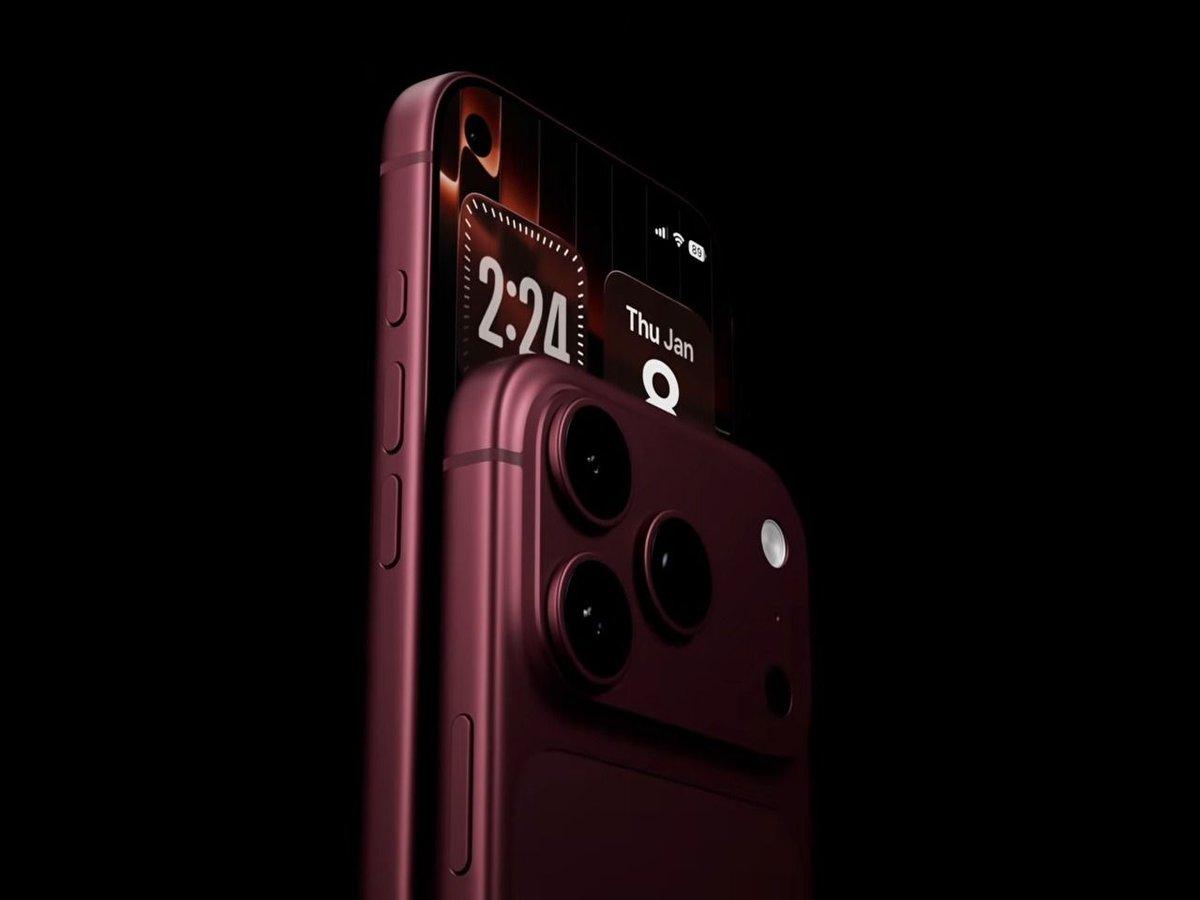
From a potentially transformative variable-aperture camera to Apple’s first 2nm mobile processor, the emerging iPhone 18 line-up could deliver meaningful improvements beneath a largely familiar design.
Apple’s next iPhone generation is beginning to take shape through a growing collection of supply-chain reports, analyst predictions and alleged prototype leaks.
Although Apple has not announced the devices, the iPhone 18 Pro and iPhone 18 Pro Max are widely expected to lead the company’s autumn 2026 smartphone launch. The standard iPhone 18 and a lower-priced iPhone 18e may then follow in spring 2027 as Apple reportedly moves towards a split annual release schedule.
MacRumors has assessed 20 circulating claims according to their apparent credibility, separating stronger reports from features that remain speculative. The most convincing rumours suggest that Apple is concentrating on photography, processing efficiency, connectivity and battery life rather than pursuing a complete visual redesign.
Several of these additions could materially change the experience of using the next Pro models. Others may offer only incremental value or never reach the finished products at all.
1. Variable-aperture main camera
The most significant prospective upgrade is a variable aperture for the 48-megapixel Fusion main camera on the iPhone 18 Pro and Pro Max.
Current iPhones use a fixed aperture, meaning the opening through which light enters the camera does not physically change. A variable system could allow the camera to control the amount of light reaching its sensor more precisely.
In brighter surroundings, a narrower aperture may help preserve detail and reduce overexposure. A wider setting could admit more light in darker conditions, while manual or automatic aperture control may also provide photographers with greater influence over depth of field.
The effect would not be identical to using an interchangeable-lens camera because smartphone sensors and lenses remain comparatively small. Nevertheless, this would represent a meaningful hardware addition for mobile photographers and filmmakers.
“A variable aperture would give the iPhone camera something computational photography alone cannot fully replicate: genuine optical control before the image reaches the sensor.”
The upgrade may prove particularly useful for video, where natural changes in focus and depth can be preferable to software-generated portrait effects.
2. The 2nm A20 Pro processor
Apple’s A20 Pro chip could provide the most important improvement that customers never physically see.
The processor is expected to be manufactured using a 2-nanometre process, moving beyond the technology used for the present iPhone generation. Smaller manufacturing processes can allow more transistors to be placed within a similar area, creating opportunities for better performance and energy efficiency.
The practical benefits may include faster artificial-intelligence processing, improved graphics, stronger computational photography and longer battery life.
Apple’s priorities increasingly depend on balancing performance with power consumption. Mobile artificial intelligence, high-resolution video and advanced gaming all demand substantial processing resources, but a phone must still remain cool enough to hold and efficient enough to last throughout the day.
The A20 Pro may also use a new packaging approach that integrates memory more closely with the processor. This could improve communication speed between components while reducing power use and the physical space occupied inside the device.
For everyday customers, the greatest advantage may not be noticeably faster application launches. It could instead be a device capable of performing more complex tasks locally without placing unsustainable pressure on battery life.
3. A smaller Dynamic Island
Rumours surrounding the front of the iPhone 18 Pro have changed repeatedly.
Earlier reports suggested Apple might place most Face ID components beneath the display, leaving only a small opening for the front-facing camera. More recent information points towards a less dramatic change, with a smaller Dynamic Island remaining near the centre of the screen.
Either approach would increase the usable display area without requiring Apple to abandon Face ID.
The iPhone 18 Pro and Pro Max are expected to retain approximate screen sizes of 6.3 inches and 6.9 inches respectively. Their displays may use LTPO+ technology, which could contribute to greater power efficiency when adjusting refresh rates and supporting the always-on display.
A reduced Dynamic Island would not transform how the phone functions, but it could make video, games and full-screen applications feel less interrupted.
Apple is likely to move cautiously because Face ID depends on several precisely aligned sensors. Hiding those components beneath the display without weakening recognition reliability or screen quality remains a considerable engineering challenge.

4. Greater battery life
Battery improvements rarely generate the visual excitement of a redesigned camera or display, but they can have a greater effect on daily use.
The LTPO+ screen and more efficient A20 Pro chip are both expected to contribute to longer operating time. The iPhone 18 Pro Max may also receive a physically larger battery, potentially accompanied by a slightly thicker and heavier body.
For Apple, the decision involves a familiar compromise. A larger battery can extend endurance, but it also increases weight in a product that some customers already consider heavy.
The company may be willing to accept that trade-off as smartphones take on more demanding workloads. Satellite communication, artificial-intelligence features, gaming, high-brightness displays and advanced cameras all place increasing pressure on battery capacity.
A more efficient processor combined with additional physical capacity could make the Pro Max especially attractive to business users, travellers and creators who regularly work away from a charger.
5. Apple’s C2 modem and satellite connectivity
The iPhone 18 Pro models are expected to use Apple’s next-generation C2 cellular modem.
Apple has spent years developing its own modem technology as it attempts to reduce dependence on external suppliers and gain greater control over the integration between connectivity hardware, software and battery management.
The C2 is expected to improve speed, efficiency and network compatibility compared with Apple’s earlier modem designs. Reports also indicate that the iPhone 18 Pro may support some form of 5G satellite connectivity, although the exact capabilities and geographic availability remain uncertain.
Existing iPhones already support emergency satellite features in selected markets. Expanding beyond emergency messaging towards broader data connectivity would be a substantial step, but technical limits, network partnerships and subscription costs could restrict what is available at launch.
The immediate value of the C2 modem may therefore be more conventional: steadier reception, improved energy efficiency and more reliable movement between mobile networks.
6. A stainless-steel vapour chamber
Improved cooling could become one of the most valuable additions for demanding users.
The iPhone 18 Pro is rumoured to use a stainless-steel vapour chamber designed to distribute heat more effectively across the internal structure. This could help the A20 Pro maintain higher performance for longer periods without reducing its speed to manage temperature.
Vapour chambers are already used in many high-performance Android phones. They contain a small amount of liquid that changes state and moves heat away from concentrated hot spots.
For iPhone users, the benefit may be most visible while playing graphically intensive games, recording extended high-resolution video or running local AI workloads.
Cooling is closely connected to battery health and sustained performance. A faster processor offers limited value when the device must quickly slow itself because of heat.
7. A second camera for the iPhone Air 2
Beyond the Pro models, Apple’s second-generation iPhone Air is reportedly undergoing advanced testing with an additional Ultra Wide camera.
The original iPhone Air prioritised a thin and lightweight design but offered only one rear camera. Adding a second lens would make the successor more versatile without necessarily compromising its central identity.
An Ultra Wide camera would support broader landscapes, architecture, group photographs and macro-style close-ups. It could also make the Air easier to recommend to customers attracted by its slim construction but unwilling to accept the limitations of a single-camera system.
Reports currently suggest that the overall design will remain similar, although battery capacity and internal space will continue to present engineering challenges.
8. New colours led by Dark Cherry
Colour remains one of Apple’s most effective methods of making a familiar design feel new.
Dark Cherry is expected to become the signature finish for the iPhone 18 Pro generation, accompanied by Light Blue, Silver and Dark Grey options. Alleged dummy models have appeared in these finishes, lending some support to earlier colour reports.
Dark Cherry could offer a deeper and more restrained alternative to the brighter finishes introduced in recent years.
The final appearance will depend heavily on the materials and surface treatment used. The same colour can appear dramatically different across polished glass, brushed metal and matte finishes.
Colour names and availability can also change late in product development, making this one of the more visible but less consequential rumours.
A divided iPhone release strategy
The devices may also introduce a major change in when Apple launches its smartphones.
Current reports indicate that the iPhone 18 Pro, iPhone 18 Pro Max and Apple’s first foldable iPhone could arrive in autumn 2026. The standard iPhone 18 and iPhone 18e would then follow during spring 2027.
Separating the launches would give Apple more time to market its premium products without the standard model competing for attention.
It could also distribute manufacturing demand across two periods, which may become increasingly useful as the iPhone family expands.
For customers, however, the change may create confusion. Someone seeking a conventional new iPhone in autumn could face a choice between paying for a Pro model, buying the previous generation or waiting several more months.
Suggested placement: Embed before the concluding section to give readers a visual reference for the design and features from which the iPhone 18 generation is expected to evolve.
Evolution rather than reinvention
The iPhone 18 Pro is unlikely to deliver a complete visual reinvention.
Reports suggest that it will preserve the broad design introduced by the iPhone 17 Pro, including its display sizes and raised rear camera plateau. The more important changes are expected to take place within that familiar structure.
A variable-aperture camera could provide genuine creative control. The A20 Pro may strengthen performance and efficiency, while improved cooling and a larger battery could help the device sustain demanding workloads.
The smaller Dynamic Island would create a cleaner display, and Apple’s C2 modem could advance the company’s ambitions in connectivity and satellite communication.
None of these features has been officially confirmed. Some may change before production, remain limited to particular models or disappear completely.
Nevertheless, the strongest rumours indicate a clear direction. Apple appears to be concentrating less on novelty for its own sake and more on the areas customers encounter every day: photography, battery life, connectivity, heat management and screen space.
The iPhone 18 generation may look familiar when it first appears. Its most important upgrades, however, could be found beneath the surface.