


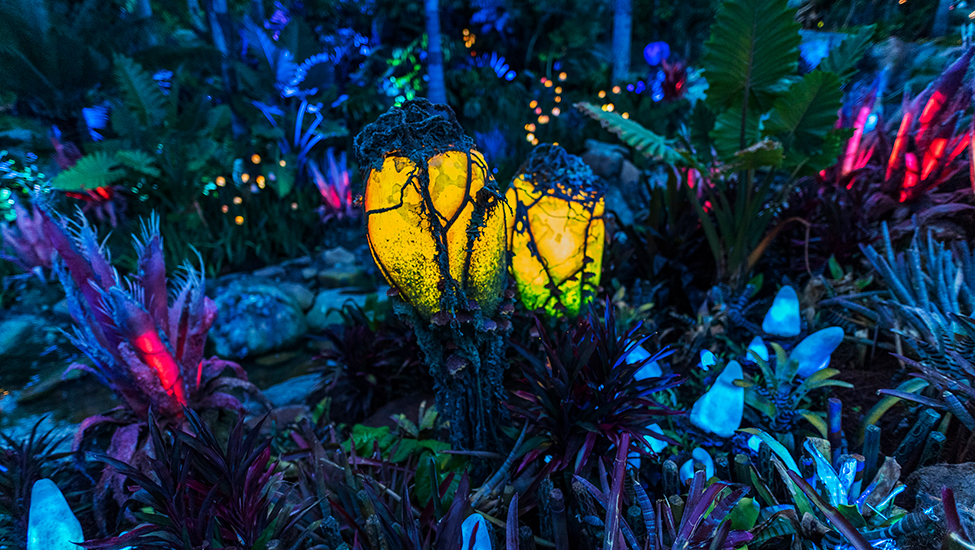
For years, the glowing forests of Avatar belonged firmly to science fiction—beautiful, impossible, cinematic.
That boundary is now beginning to blur.
Chinese scientists have successfully engineered plants that emit their own light, creating what many are calling “Avatar-like” vegetation. It is not metaphor. It is biology, redesigned. And while the visuals capture attention, the implications reach far beyond aesthetics—touching energy, urban design, and the future of sustainable infrastructure.
The Science Behind the Glow
At the centre of this breakthrough is a deceptively simple idea: borrow light from nature itself.
Researchers, led by biotechnology specialist Dr Li Renhan, have used gene-editing techniques to transfer bioluminescent properties from fireflies and luminous fungi into plant cells. The result is a living organism that emits a soft, visible glow without any external power source.
More than 20 plant species have already been modified, including:
- Orchids
- Sunflowers
- Chrysanthemums
Each now carries the biological machinery required to produce light naturally.
Unlike traditional lighting systems, these plants require only water, nutrients, and their own metabolic processes to function—no electricity, no wiring, no infrastructure.
A Glimpse Into the “Avatar World”

4
The inspiration behind the project is strikingly human.
Dr Li has spoken about childhood memories of fireflies lighting up rural nights—an experience that later evolved into a scientific pursuit. His vision is not subtle:
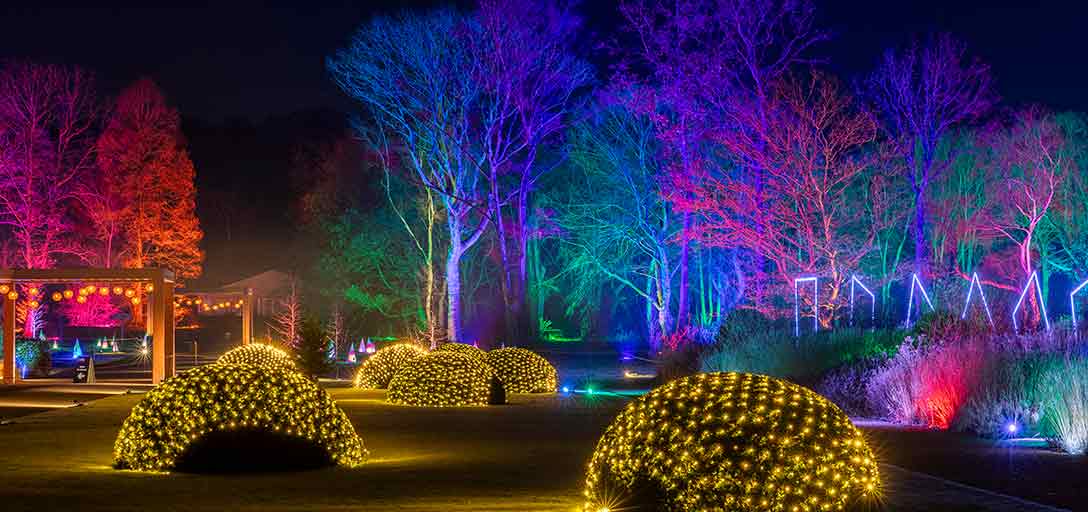
Entire landscapes illuminated by living plants.
Public demonstrations at the Zhongguancun Forum showcased flowers glowing in real time, hinting at what a scaled environment could look like.
The ambition is clear—create environments where light is grown, not generated.
Beyond Aesthetic: A New Model for Urban Lighting
The immediate reaction to glowing plants is often wonder. The more important response is practicality.
These plants represent a potential shift in how cities think about lighting:
- Energy reduction – No electricity required
- Lower emissions – Reduced reliance on grid-based lighting
- Infrastructure simplicity – No cables, no maintenance systems
- Continuous operation – Light produced biologically, not mechanically
Researchers suggest applications ranging from public parks and pathways to tourism zones and architectural landscapes.
The idea is not necessarily to replace streetlights overnight, but to rethink where and how artificial lighting is needed at all.
Competing Approaches: Genetics vs Materials
Interestingly, gene editing is not the only path being explored.
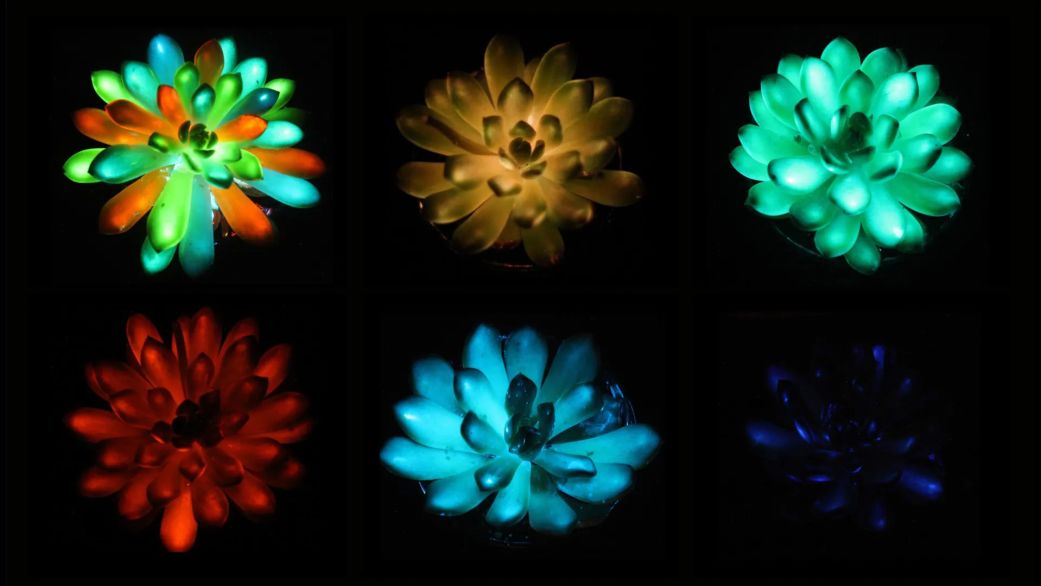
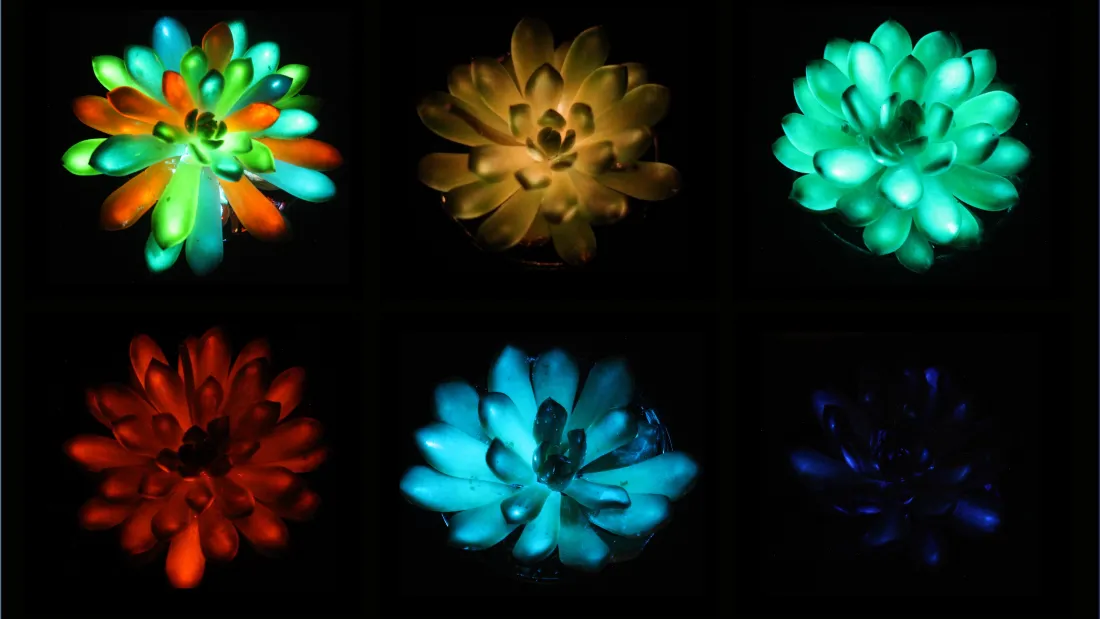
A separate research approach involves injecting plants with phosphorescent particles—materials that absorb sunlight during the day and release it at night. This method can produce brighter illumination, though typically for shorter durations.
The contrast is telling:
- Genetic approach → continuous, organic glow
- Material approach → brighter but temporary afterglow
Both signal the same direction of travel: lighting is becoming biological.
The Wider Scientific Context
This development sits within a broader evolution in plant science.
Bioluminescence is now being used not just for visual impact, but for:
- Tracking disease progression at a cellular level
- Accelerating drug discovery
- Engineering pest-resistant crops for global food security
In other words, the glowing plant is not a novelty—it is a visible expression of a much deeper shift in how biology is engineered and applied.
The Real Question: Vision or Viability?
There is, of course, a gap between laboratory success and real-world deployment.
Key questions remain:
- Can brightness levels scale to meaningful urban use?
- How durable are these plants across seasons and climates?
- What are the regulatory and ethical implications of gene-edited public environments?
For now, the technology sits somewhere between prototype and possibility.
But that space is shrinking.
A Living Light Economy
What makes this moment significant is not just the innovation itself, but what it represents.
For decades, technological progress has meant more hardware—more systems, more energy, more infrastructure.
This points in the opposite direction.
A future where:
- Lighting grows instead of being installed
- Cities integrate biology into infrastructure
- Sustainability is embedded, not retrofitted
The “Avatar world” comparison may feel cinematic, but it is also instructive. The idea of living ecosystems providing functional infrastructure is no longer speculative—it is being engineered, one organism at a time.
And quietly, almost imperceptibly, the line between environment and technology is beginning to disappear.