


For more than a decade, technology companies have promised a future where digital information seamlessly blends into the physical world. From smart glasses and mixed reality headsets to wearable AI assistants, the industry has spent billions chasing what many believe will become the successor to the smartphone.
Now, Snap is making its boldest move yet.
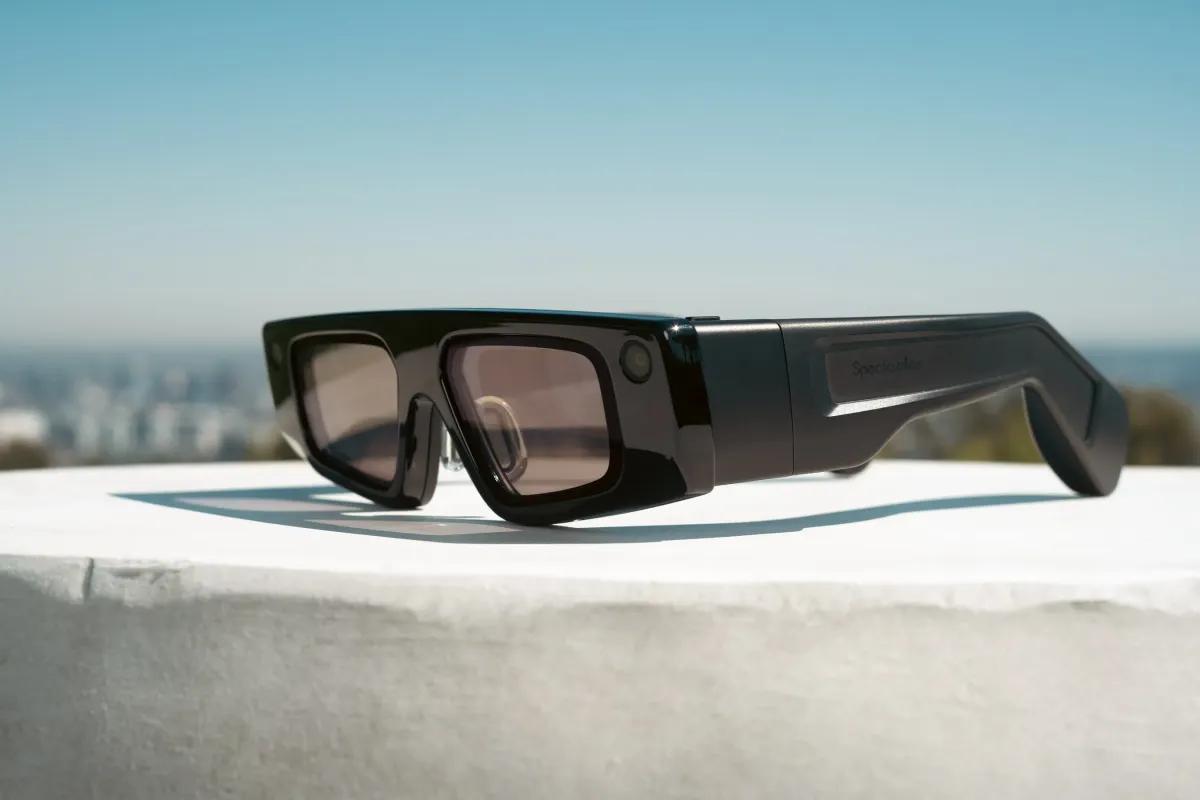
At the Augmented World Expo (AWE) 2026, the company officially unveiled Specs, a fully standalone pair of augmented reality glasses that place interactive digital experiences directly into a user’s field of vision. More significantly, the company has opened consumer pre-orders, bringing its long-running AR ambitions into the real world for the first time. Specs will ship this autumn in the United States, United Kingdom and France with a price tag of $2,195.
“Snap isn’t simply launching another gadget. It is attempting to redefine what personal computing looks like beyond the smartphone era.”
A Decade in the Making
Snap’s journey towards consumer AR glasses has been years in the making. Previous generations of Spectacles served largely as experimental hardware and developer platforms, allowing creators to build experiences while the company refined its technology.
Specs represents the culmination of that effort.
Unlike camera-focused smart glasses or display-equipped eyewear that simply projects information onto a small screen, Specs are designed as true augmented reality glasses. Virtual objects can appear naturally within the user’s environment, interacting with the physical world in real time. Snap says the project represents more than $3 billion in AR investment and over a decade of development.
Designed to Blend Digital and Physical Worlds

The hardware itself is considerably more advanced than previous Snap wearables.
Specs feature transparent waveguide displays capable of showing 16 million colours within a 51-degree field of view, creating a visual experience that feels significantly more immersive than traditional smart glasses. Electrochromic lenses can automatically transition from clear to tinted in approximately ten seconds, helping users adapt to changing environments.
The glasses are powered by dual Qualcomm Snapdragon processors, with one dedicated to computer vision and spatial awareness while the other manages operating functions and applications. Hand tracking, voice controls and AI-powered interactions are built directly into the device, eliminating the need for external controllers.
Perhaps most impressively, everything operates within a standalone form factor.
There is no tethered computing puck, no smartphone dependency and no bulky headset attached to the user.
The Price That Has Everyone Talking
If Specs has one feature generating more discussion than any other, it is undoubtedly the price.
At $2,195, Snap’s new AR glasses sit far above Meta’s Ray-Ban smart glasses while remaining below the cost of Apple’s Vision Pro headset. The price has sparked considerable debate across the technology industry, with some analysts questioning whether consumers are ready to spend more than two thousand dollars on a new computing category.
Battery life is rated at approximately four hours of active use, though a charging case extends total runtime significantly and allows users to recharge while wearing the device. The glasses are also available in multiple sizes and support prescription lenses.
“The technology may be futuristic, but the challenge remains convincing consumers that the future is worth $2,195 today.”
Entering a Crowded Battlefield
Snap may have beaten some competitors to market with standalone AR glasses, but it is entering an increasingly competitive landscape.
Meta continues to invest heavily in wearable computing through its smart glasses partnership and broader Reality Labs ecosystem. Google has renewed its ambitions through Android XR initiatives, while Apple remains committed to spatial computing following the launch of Vision Pro.
The battle is no longer about proving augmented reality is possible. The challenge now is proving that it is practical, affordable and compelling enough to become part of everyday life.
Beyond Entertainment
One of the most intriguing aspects of Specs is the breadth of potential applications.
During demonstrations, Snap showcased navigation, productivity tools, AI-powered assistance, spatial measurement capabilities, gaming experiences and real-world overlays that interact naturally with a user’s surroundings. The company’s vision extends far beyond entertainment, positioning AR as a platform for work, communication, education and creativity.
If successful, Specs could help accelerate a broader transition towards wearable computing that many technology leaders believe is inevitable.
Video: Snap Unveils the Future of AR
Looking Ahead
The unveiling of Specs marks one of the most ambitious product launches in Snap’s history. After years of experimentation, developer programmes and billions of dollars in investment, the company has finally put a consumer-ready version of its AR vision on the market.
Whether consumers embrace that vision remains to be seen.
The technology is impressive, the ambitions are enormous and the potential is undeniable. Yet the combination of a premium price, emerging software ecosystem and growing competition means Specs enters a market that is still searching for its defining moment.
What is clear is that the race to build the next computing platform has entered a new phase. With Specs, Snap is no longer talking about the future of augmented reality.