



For users who value privacy and control, the FLX1s from Furi Labs looks like a serious contender. Based in Hong Kong, Furi Labs has built a smartphone around one core idea: when it comes to your data and communications, you should hold the power.
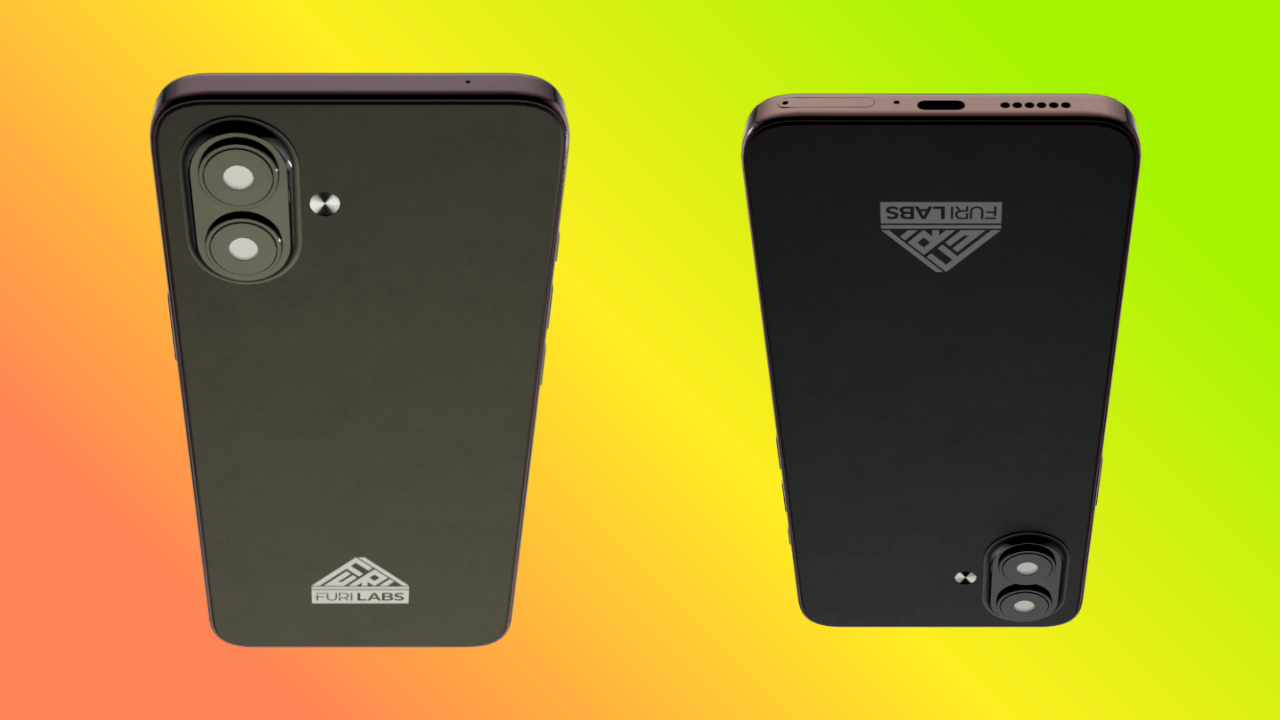
Built for Privacy: Three Kill Switches, All Physical
What sets the FLX1s apart isn’t just that it runs a Linux-based OS—it’s that it gives you three physical, hardware killswitches. One disables the microphone, another cuts both front and rear cameras, and the third severs cellular connectivity (modem/GPS) entirely at the hardware level. No software trickery, no hidden bypasses. If you flip the switch, that component is electrically off.
It’s a bold move. The market for devices with physical privacy controls is niche—but growing. As surveillance, data harvesting, and exploit risks grow, some users are pushing back by demanding hardware-level safeguards.
Inside the FLX1s: Specs & Experience
- Chip & memory: Powered by a MediaTek Dimensity 900 chip, with 8 GB of RAM and 128 GB of internal storage. If that isn’t enough, you can expand via micro-SD (up to 1 TB).
- Software: The phone runs FuriOS, a Debian-based operating system. It supports multi-boot, compatibility layers for Android apps, and even virtualization support for running multiple OSes side by side.
- Display & design: The screen is 6.7″ with a 90 Hz refresh rate, albeit with modest resolution compared to flagship phones. The device mixes a glass back, polycarbonate midframe, and metal buttons.
- Cameras & battery: It has a 20 MP + 2 MP camera array on the back, and a 13 MP front camera. Power comes from a 5,000 mAh battery.
- Connectivity: Dual-SIM, 2G/3G/4G/5G, Wi-Fi 6, Bluetooth 5.2. Standard modern wireless features are all there.
Strengths & Trade-Offs
Strengths:
- Transparent, physical privacy control—something many phones can only fake via software.
- Strong flexibility via its Linux OS: you’re not locked into one ecosystem.
- A good balance of specs for daily use, multitasking, and moderate performance tasks.
Trade-Offs:
- It’s not a power phone in flagship territory—if you’re doing heavy gaming or 4K video processing, you might feel its limits.
- Color reproduction, display sharpness, and photo/video performance will not match premium OLED phones.
- Hardware switches are great—but that means design and durability need to keep up. If a switch fails physically, that’s a bigger issue than software.
Price, Availability & What’s Worth Watching
The FLX1s is priced at around $550. The first production batch sold out; the second batch is now open for pre-order, with deliveries expected shortly after manufacturing finishes (target late 2025).
What will matter most in real use:
- Reliability of the hardware switches over time—can they resist wear, dust, or accidental misuse?
- How smooth the Android app compatibility works in daily usage.
- How well Furi Labs supports firmware updates, security patches, and long-term maintenance.
Final Thoughts
The Furi Labs FLX1s might not rival mainstream flagships in raw power or camera wizardry—but it doesn’t pretend to. What it offers instead is something increasingly rare: autonomy, control, privacy. For those who find trade-offs acceptable in exchange for deeper control over how (or whether) their phone spies on them, this may well be one of the most interesting devices of the year.