


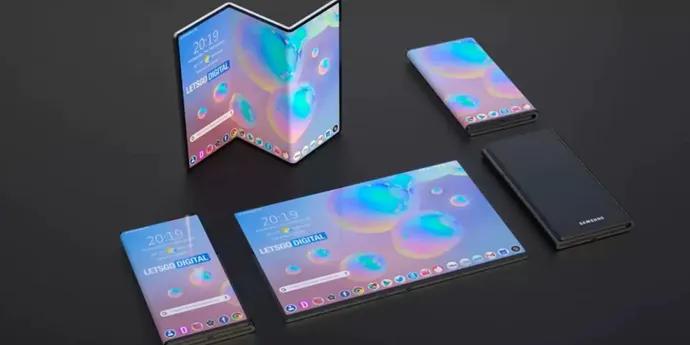
Samsung has offered a tantalising first look at its next major innovation — the Galaxy Z TriFold, a new flagship device that takes foldable technology to the next level. Designed with two hinges and three display panels, the TriFold is set to blur the boundaries between smartphone, tablet, and laptop in a single, highly adaptable form.
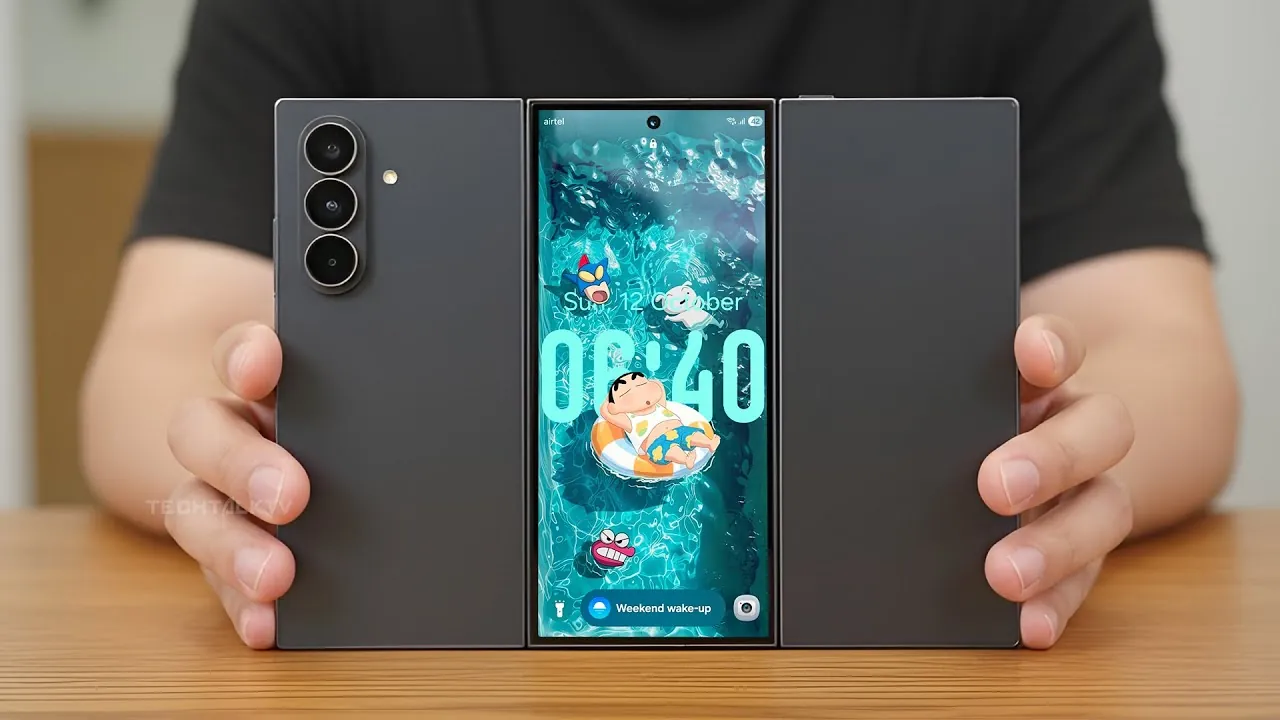
A New Era in Foldable Design
The Galaxy Z TriFold introduces a revolutionary “U-shaped” folding mechanism that allows the device to transition seamlessly between compact and expansive modes. When folded, users have access to a front display roughly the size of a standard smartphone, while unfolding it reveals a tablet-sized screen of around 10 inches.
The design offers the flexibility to multitask across multiple windows, stream media in widescreen format, or use productivity tools with laptop-like efficiency. Early images suggest a premium build with sleek lines, refined hinges, and an upgraded triple-lens camera system that mirrors Samsung’s current flagship standards.
Power, Performance, and Purpose
At the heart of the TriFold is Samsung’s ambition to redefine what a mobile device can do. With a larger screen real estate, users can run several apps simultaneously — ideal for creative work, video calls, and immersive entertainment. The device is expected to support Samsung DeX, enabling a desktop-style experience for professionals on the go.
For the camera, speculation points to a high-resolution primary sensor, potentially reaching the 200MP threshold seen in other Galaxy flagships. Combined with Samsung’s AI-powered imaging tools, this could make the TriFold one of the most versatile content creation devices ever produced.
Innovation Meets Engineering Challenge
While the TriFold represents a major leap in mobile design, it also brings significant engineering hurdles. With two hinges and multiple flexible displays, long-term durability and crease management will be under intense scrutiny. Samsung’s advancements in ultra-thin glass and hinge reinforcement will be critical to ensuring the device’s reliability and premium feel.
Battery life and heat management are other key challenges — powering and cooling a 10-inch display in such a compact chassis requires next-generation efficiency. Early prototypes are believed to utilise optimised battery segmentation and adaptive refresh rates to balance performance with endurance.
Market Impact and Outlook
If successful, the Galaxy Z TriFold could redefine the foldable landscape. Rather than a simple evolution of the Galaxy Z Fold line, this device represents a new category altogether — a hybrid between smartphone, tablet, and productivity tool.
However, its premium technology will likely come at a premium price, positioning it for professionals, tech enthusiasts, and early adopters rather than the mainstream market at launch. Availability may begin in Asia before expanding globally, mirroring Samsung’s rollout pattern for previous foldables.
Final Thought
The Galaxy Z TriFold is shaping up to be Samsung’s boldest statement in mobile innovation to date. It encapsulates the company’s vision of flexibility, productivity, and future-ready design — delivering a device that truly adapts to how we live and work.
If the execution matches the ambition, the TriFold could become a defining moment in the evolution of personal technology — one where the foldable phone finally fulfils its promise as a true all-in-one device.