


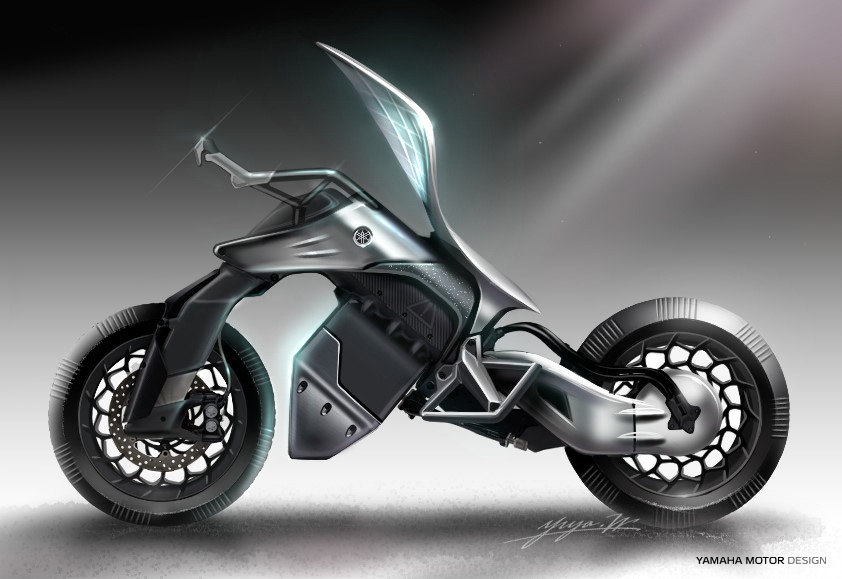
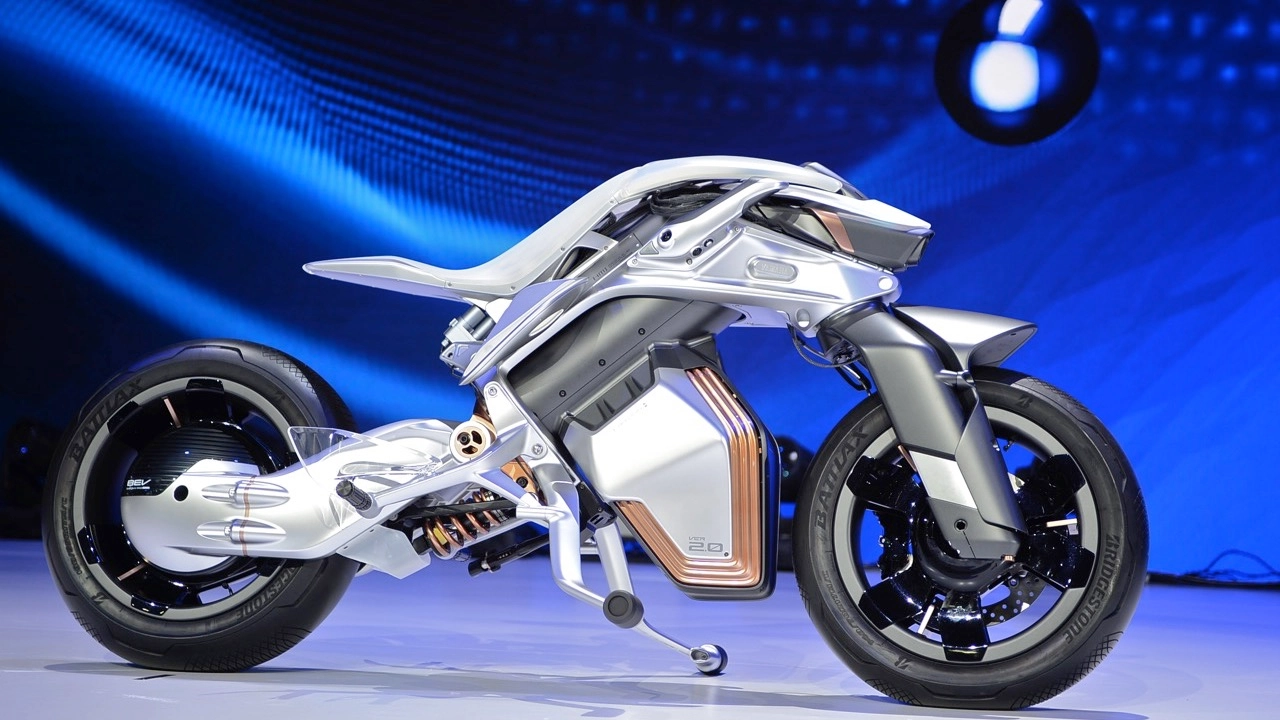
If ever a motorcycle felt more like a living companion than a machine, it’s the Yamaha MOTOROiD 2. This groundbreaking concept merges artificial intelligence, self-balancing technology, and futuristic design to explore what the next generation of motorcycling could be.
A Glimpse into Tomorrow
The MOTOROiD 2 isn’t just an electric motorcycle — it’s a statement of intent. Built as an evolution of Yamaha’s original MOTOROiD project, the concept pushes the limits of what human–machine interaction can achieve.
At its core lies an advanced self-balancing system known as Active Mass Centre Control, allowing the bike to remain upright without support and even move autonomously at low speeds. It can recognise its rider, respond to gestures, and approach when summoned — blurring the line between vehicle and intelligent companion.
The design is equally daring. Its lightweight frame, flowing curves, and exposed electric components create a visual language that’s part machine, part organism. The riding position is fully adaptive, allowing users to shift between traditional seating and an upright, “centaur-style” stance that enhances balance and control.
A Fusion of Technology and Emotion
What makes the MOTOROiD 2 so compelling is its focus on emotional connection. Yamaha’s engineers describe it as an experiment in trust — a motorcycle that understands its rider’s presence, responds to their movements, and learns their habits over time.
Central to this is the LEAF interface, a sculpted panel that acts as the machine’s sensory and emotional hub. Through subtle lights, sound, and movement, it communicates readiness, mood, and feedback to the rider. This transforms the bike from a mechanical tool into something more personal — a responsive partner that mirrors human intent.
The self-balancing technology, meanwhile, redefines accessibility. By maintaining stability at a standstill or during manoeuvres, it opens motorcycling to riders who might otherwise find two-wheel balance intimidating. It’s a glimpse into a world where motorcycles are not only powerful but inclusive and adaptive.
Why It Matters
Yamaha’s concept is not about immediate commercialisation — it’s about exploration. It represents a vision of mobility where design, intelligence, and emotion converge. The MOTOROiD 2 challenges assumptions about what riders want from their machines, and whether the future of two wheels might involve more intuition than instruction.
Key themes driving its development include:
- Safety and control through self-balancing dynamics
- Human–machine empathy, where technology anticipates rather than reacts
- Sustainability, through electric propulsion and lightweight construction
- Design freedom, using form to express movement and intelligence
The Road Ahead
Whether or not the MOTOROiD 2 reaches production, its influence is undeniable. The technologies it pioneers — from self-balancing systems to AI-driven rider assistance — could soon find their way into Yamaha’s next generation of electric bikes and scooters.
More importantly, it signals a cultural shift: one where riders engage with their machines as partners rather than possessions. As automation and design philosophy evolve, the future of motorcycling may not be about horsepower, but about harmony between human and machine.
Final Thought
The Yamaha MOTOROiD 2 isn’t just a vision of the future — it’s a conversation starter. By blending innovation, artistry, and emotion, Yamaha has created a machine that dares to ask: what happens when a motorcycle stops being just a ride, and starts to think, feel, and move with you?